 |
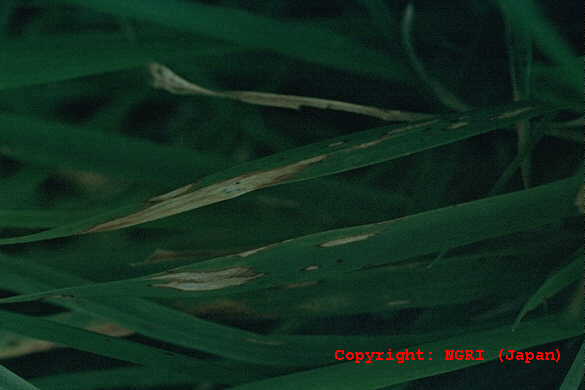
Spot-causing fungal disease occurring mainly in the warm regions. The lesions are ash white with brown border and short spindle-shaped. The lesion size is about 2-5mm, but soon they fuse mutually and cause leaf blight of the entire leaf. Causal organism is homogeneous with rice blast fungus, but its pathogenicity is partially differentiated. |
 |
Spot-causing fungal disease. Lesions are at first dark brown and small spots, then enlarge to oval ones of 1-3mm in length and 0.5-1mm in width. The lesions fuse mutually and it causes leaf blight. Gray molds are produced on the lesions. When the disease occurs severely, it also caused head blight. |
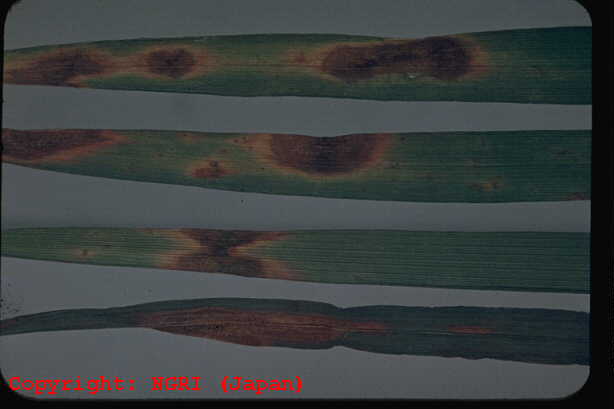 |
Spot-causing fungal disease. The lesion of brown to purple brown, short line shaped, 2-3mm in length and 0.5-1mm in width appears between the leaf veins at first. They gradually expand to 2-3cm in length and fuse one another. At last, the whole leaf becomes ash white and killed. The spores which look like small black molds are produced on the old lesion, and they disperse and spread. The pathogen can infect timothy, orchardgrass and etc., but the pathogenicity is considered to be differentiated. |
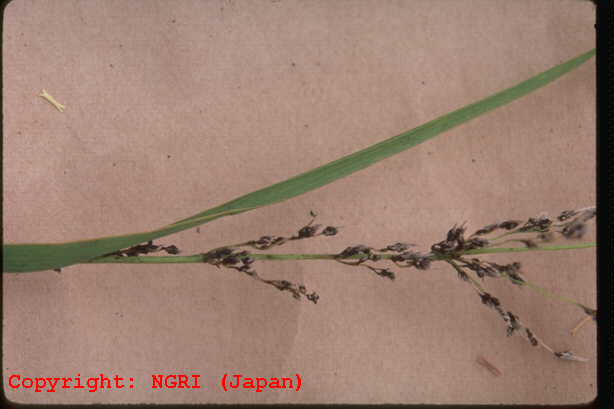 |
Fungal disease making grain black powdery. The pathogen infect when flowering, and then the ovary swells making the inside of the seeds black powdery. When matured, the husk tears, and disperses black powder (smut spore). All the grain are infected when occurring severely and only the head spikes are left. The pathogen transmits in the form of hyphae and the smut spores exist for a long term in the soil. |
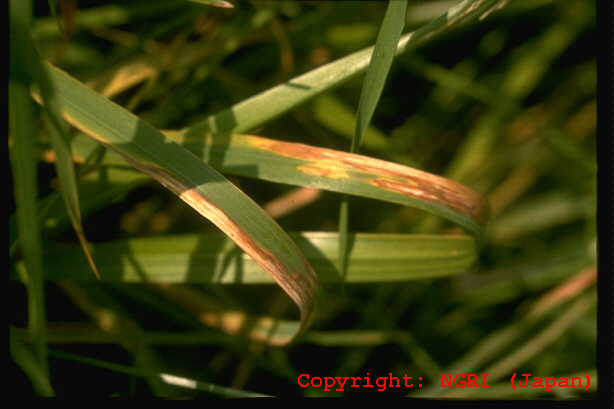 |
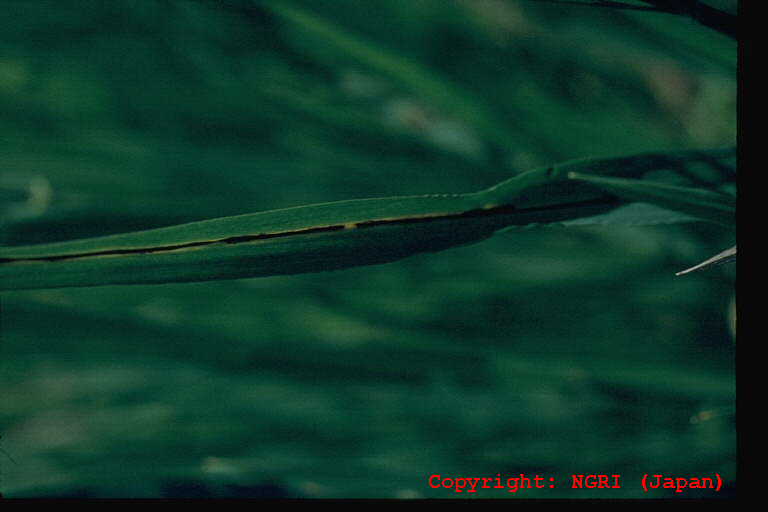
Fungal disease. It produces reddish brown, oval to spindle shaped lesion in the leaf. The lesions expand long and this causes rolling and withering of the leaf. |
 |
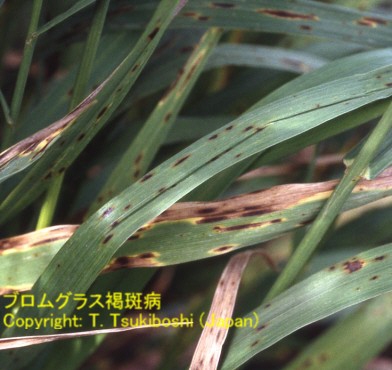
Bacterial disease which causes leaf blight occurring mainly in the warm regions. The disease produces at first water-soaked spots in leaves and then the lesions become brown and oval to spindle-shape or irregular and surrounded with yellow halos. The lesion expand to long sripe when the disease advances and finally it might invade the head spikes and seeds. The causal organism is same with that of ryegrass halo blight. |
 |
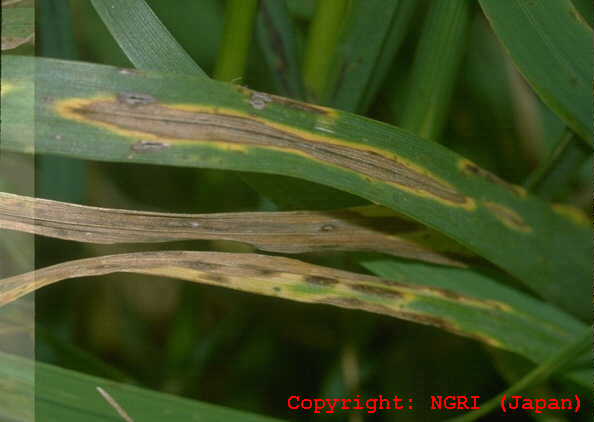
Fungal disease which produces spots in leaves and sheaths and occurs in
Hokkaido, the most northern region of Japan. The lesions are brown, oval to spindle-shaped,
5-10 mm in length, and 1-3 mm in width with yellow halo. The damage
is severe especially in smooth bromegrasss. A disease resistant line
of smooth bromegrass was bred in Japan.
|
 |
Fungal disease which produces spots in the leaf. The lesions are at first brown small spots or short lines, and then expands gradually to brown, oval to spindle-shaped ones of 0.2-3 cm in length, and 0.1-1 cm in width. The sizes of the lesions vary in a wide range. The causal organism is homogeneous with summer spot fungus of ryegrass and leaf spot fungus of fescue, but they may differ in pathogenicity. The host range of the pathogen is wide. |
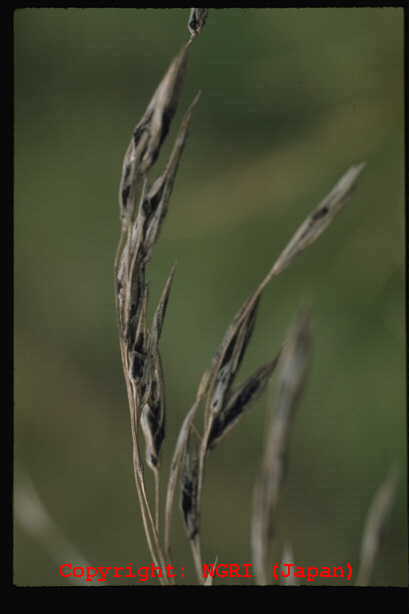 |
Fungal disease making grain black powdery. The pathogen infect when flowering, and then the ovary swells making the inside of the seeds black powdery. When matured, the husk tears, and disperses black powder (smut spore). All the grain are infected when occurring severely and only the head spikes are left. The pathogen transmits in the form of hyphae and the smut spores exist for a long term in the soil. |
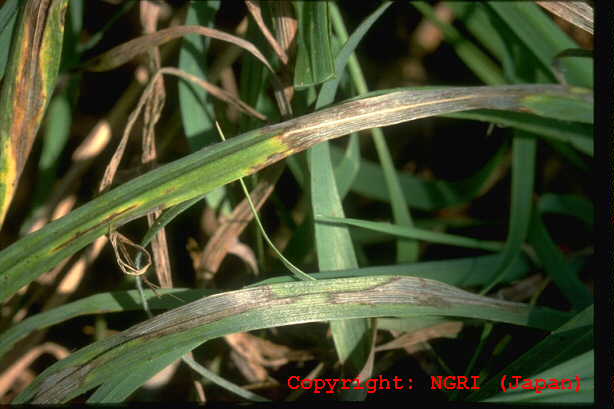 |
An Important fungal disease which occurs all over the country and becomes a cause of summer depression of grassland. Ash green and water-soaked lesions appears at first and the whole infected plant soften like being boiled before long. Then, the infected stalks and leaves fall one upon another and rot when the disease progresses and hyphae like spider' web appear covering all the infected part. Later light brown to brown sclerotia of about 5mm in diameter are produced on the infected part. At this point, the infected grass withers forming patches and the grassland gradually becomes bare land. The causal organism is polyxeny and can infect most grasses and legumes of herbage.
|
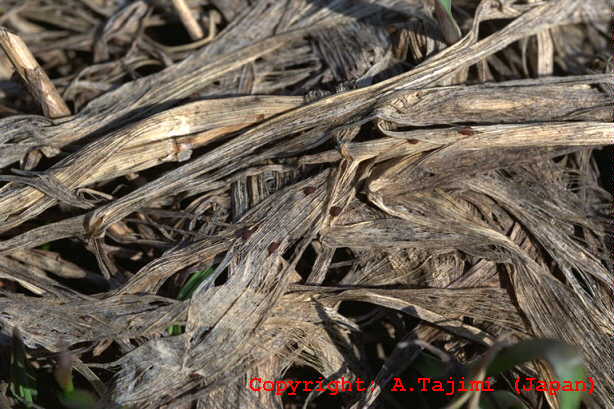 |
Important fungal disease which causes plant death and occurs mainly in Hokkaido, the most northern part of Japan. The symptom is similar that of T.ishikariensis, but the sclerotia formed on the surface of withering part is reddish brown and millet grain size. The sclerotia is formed on the stalks, leaves, and roots, etc. of the withering plant. The pathogen is more saprophytic than T.ishikariensis and is considered to invade after invasion of T.ishikariensis and occur mixingly with it. |
 Return to top