 |
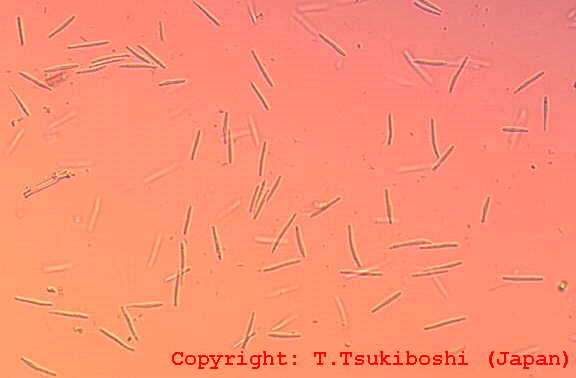
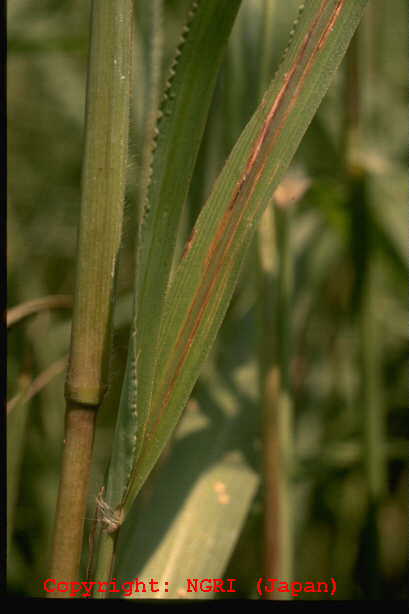
Bacterial disease. Lesions are at first ash white, small oval lesion in a young leaf. Later it gradually extends long along leaf veins, and it becomes a reddish brown, long stripe. The lesion part becomes thin like a paper and to split easily. A lot of bacteria are detected from the infected leaf, and they disperse and transmit by wind and rain, etc. The causal bacteria parasitize in many kinds of gramineous plants, such as corn, rice, foxtail millet, African millet, millet and etc. |
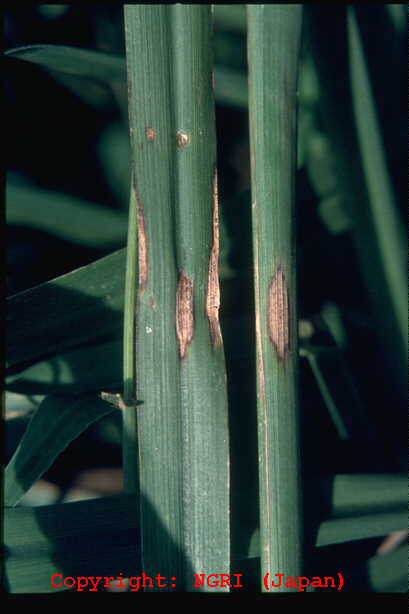 |
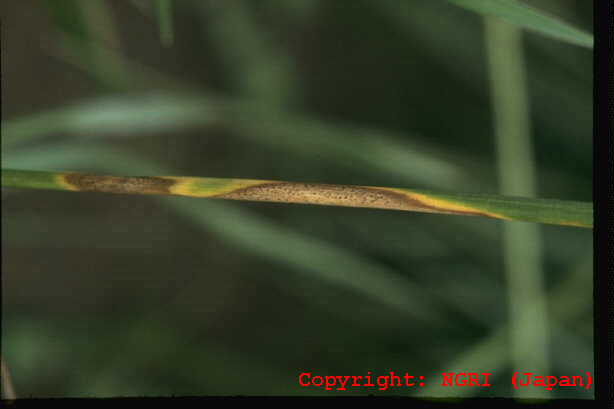
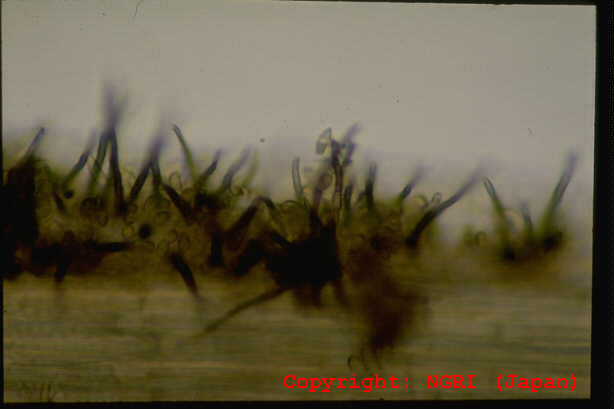
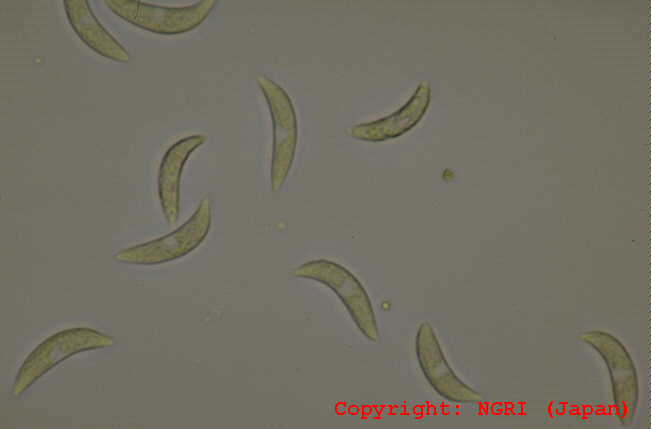
Fungal disease which causes leaf blight in the warm regions. The lesions are grayish brown to orange, oval to spindle shaped ones of 5-10mm in length. The fungal tissues, setae, are produced in the center of the old lesion and looks black moldy. The surroundings of the lesion turn to yellow severely and the lesions fuse mutually causing leaf blight when the disease progresses. The species of the pathogen is same with the other anthracnose pathogen of gramineous plants, but the pathogenicity is considered to be differentiated. |
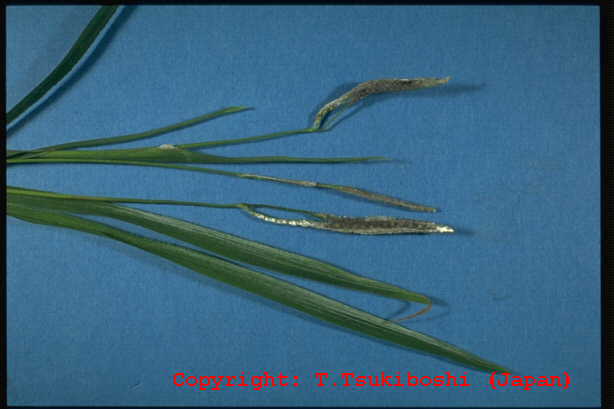 |
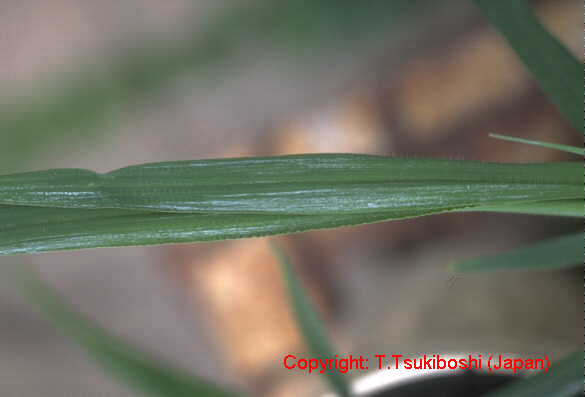
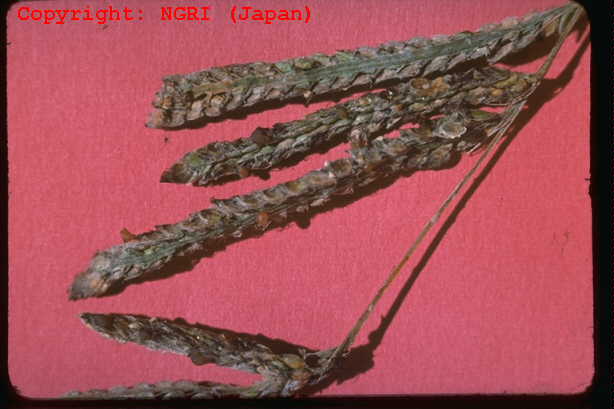
Fungal disease which causes head blight and occurs mainly in the warm regions. After heading, the whole infected heads are covered with gray to black colony. Later the fungus fasten each head spike and the whole head looks grayish black moldy. White colony appears on the surface of the leaf like the sripe along the leaf vein. It is reported that the causal organism is infected in the entire plant as an epiphyte and the infected plant becomes resistant to insects such as grasshopper. |
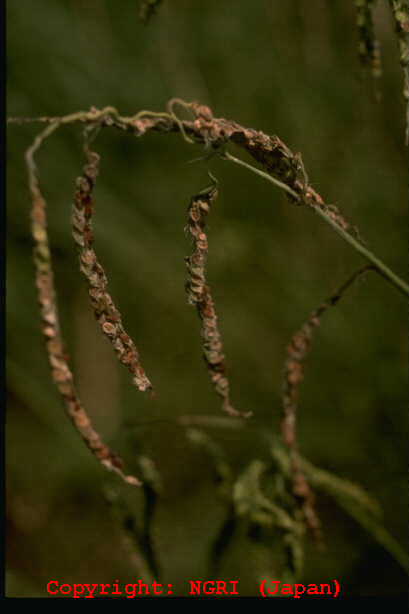 |
The ergots (sclerotia) are formed in the head and have toxicity to livestocks. The disease at first produces light-brown honey dew in the head just after flowering, and many spores included in the honey dew disperse and transmit by wind and rain. The purplish black ergots are produced in the infected flowers replacing the seeds. The ergots drop to the ground, germinate in next year, and disperse ascospores as primary inocula. The pathogen can infect only kinds of paspalum. |
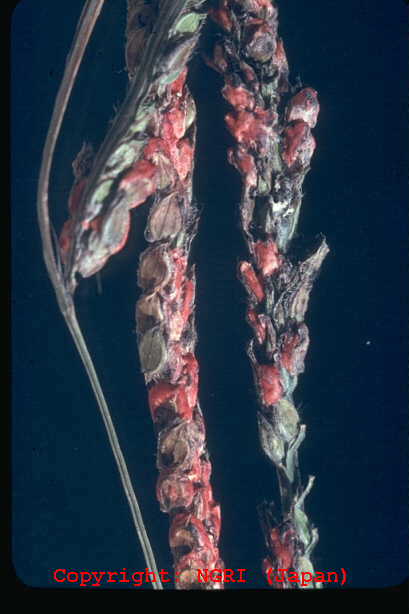 |
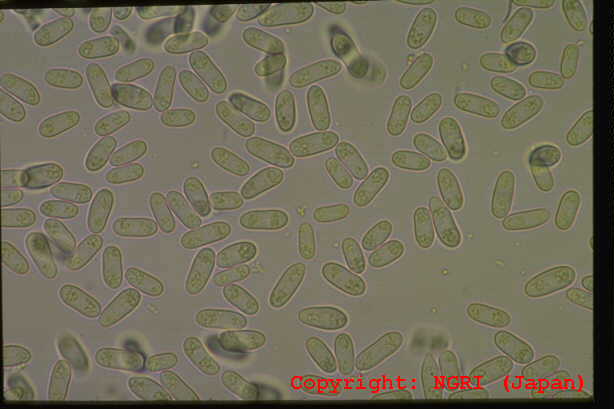
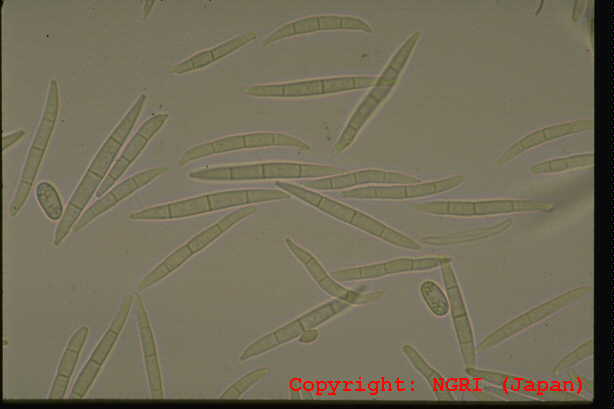
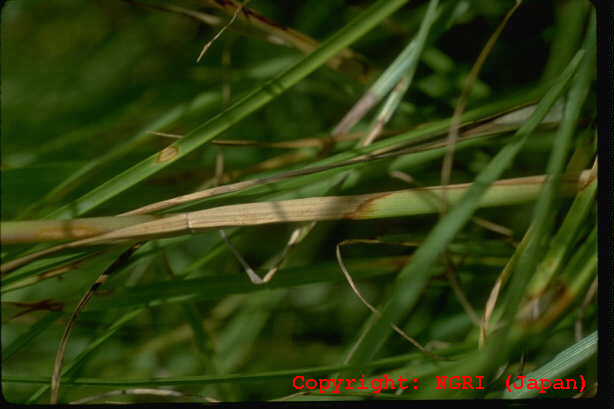
Fungal disease that occurs in the heads. The head spikes become red to brown and pink-colored molds grow in the joint of glume. It also occurs in the leaf and produces oval zonate lesions of a rice grain size. The causal organism exists continuously also in the soil and this becomes primary inocula. Besides, the disease occurs in a lot of cereals such as rice and wheat. |
 |
Fungal disease occurring a lot in the warm regions and causing plant blight. The leaf at first become water-soaked and ash green and then softens like pouring boiled water. Large lesions are formed in the leaf. The infected grass withers forming patches and the grassland gradually becomes bare land. The causal organism is not yet identified. |
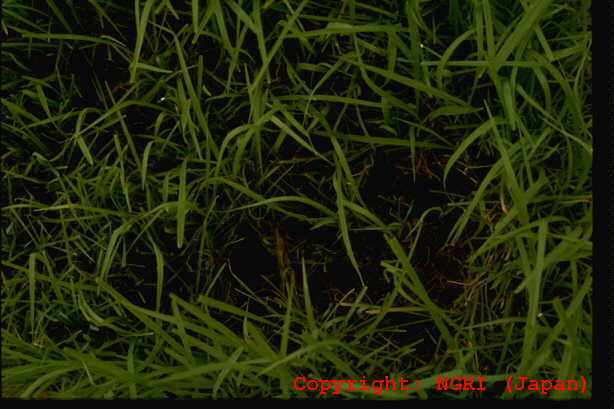 |
Ash green and water-soaked lesions appears at first and the whole infected plant soften like being boiled before long. Then, the infected stalks and leaves fall one upon another and rot when the disease progresses and hyphae like spider' web appear covering all the infected part. Later light brown to brown sclerotia of about 5mm in diameter are produced on the infected part. At this point, the infected grass withers forming patches and the grassland gradually becomes bare land. The causal organism is polyxeny and can infect most grasses and legumes of herbage. |
 Return to top