 |
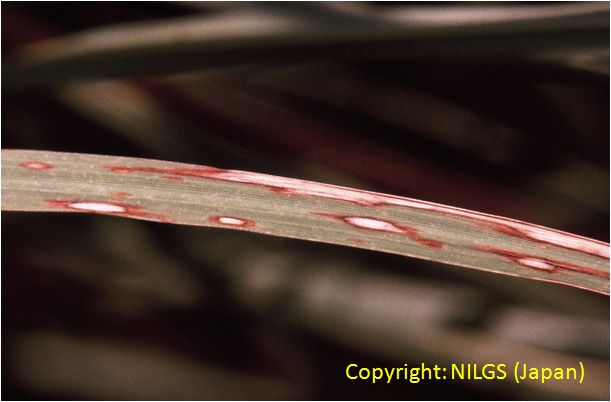
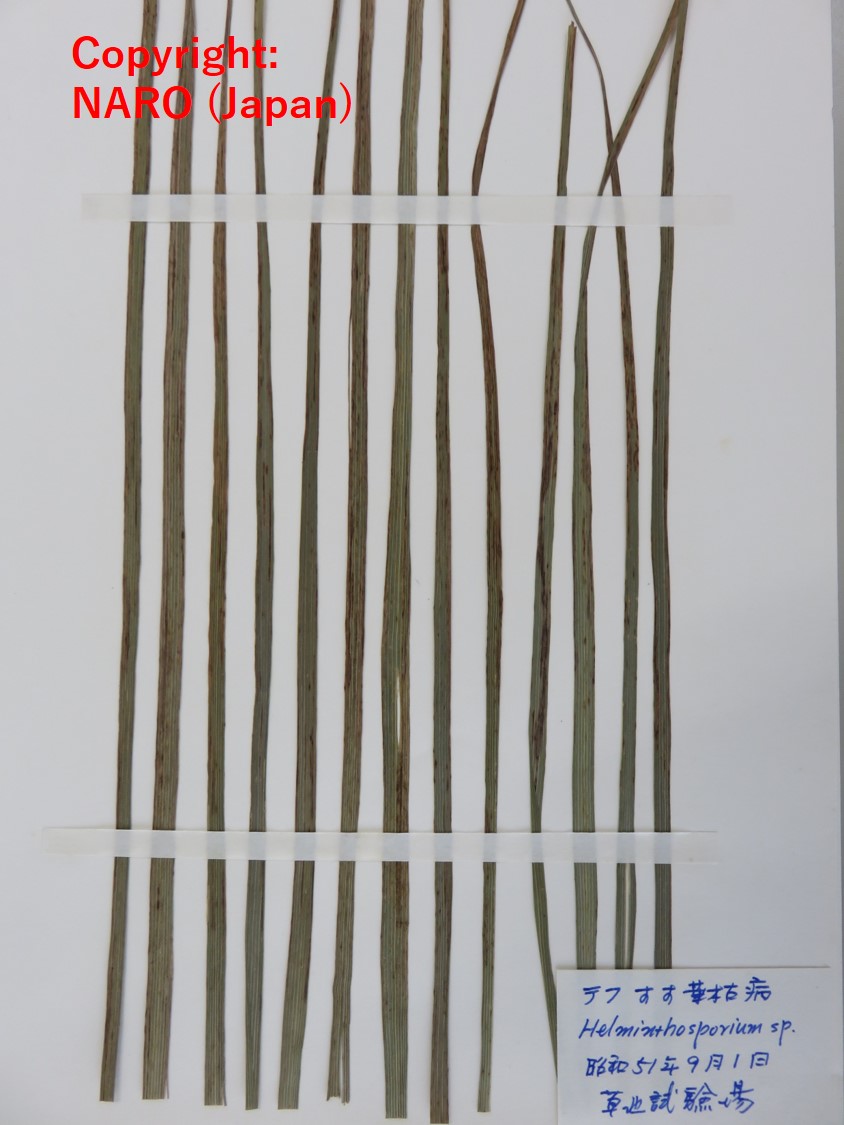
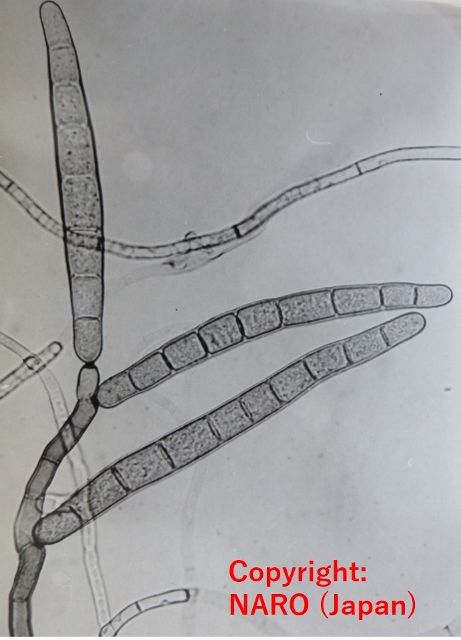
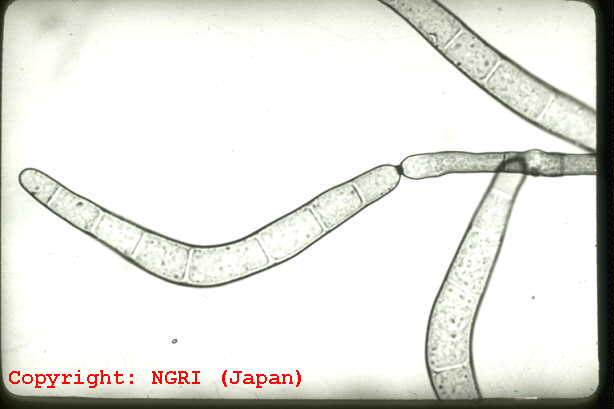
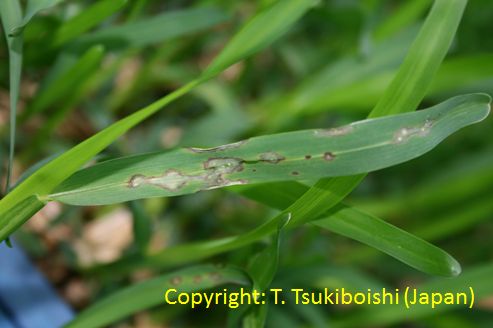
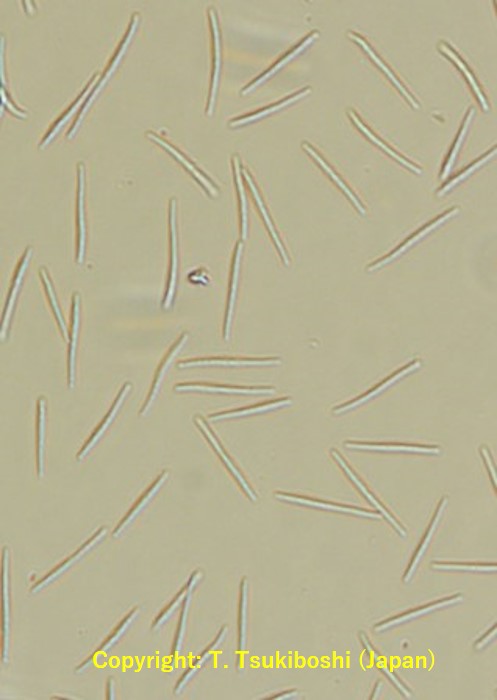
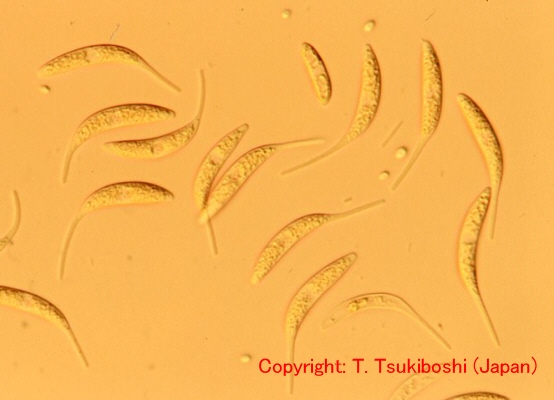
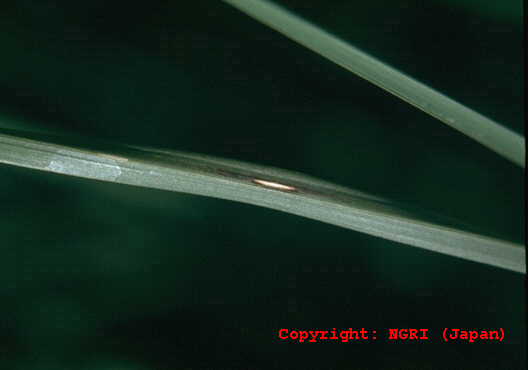
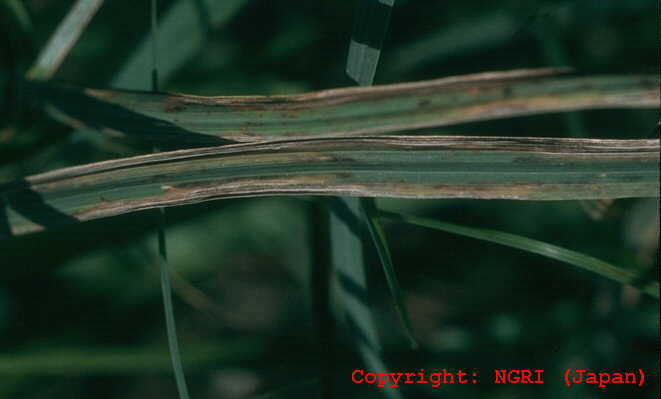
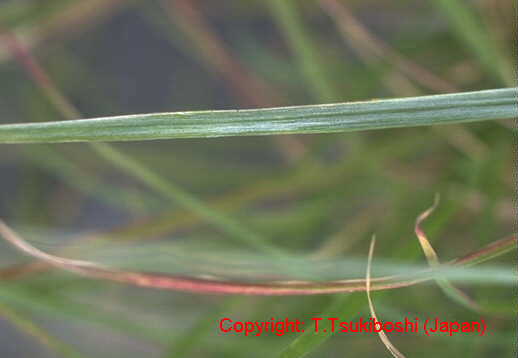
Spot-causing fungal disease occurring mainly in the warm regions. The lesions are ash white with brown border and short spindle-shaped. The lesion size is about 2-5mm, but soon they fuse mutually and cause leaf blight of the entire leaf. Causal organism is homogeneous with rice blast fungus, but its pathogenicity is partially differentiated. |
 |
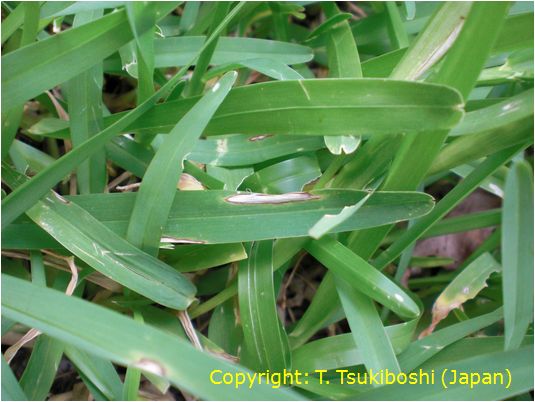 |
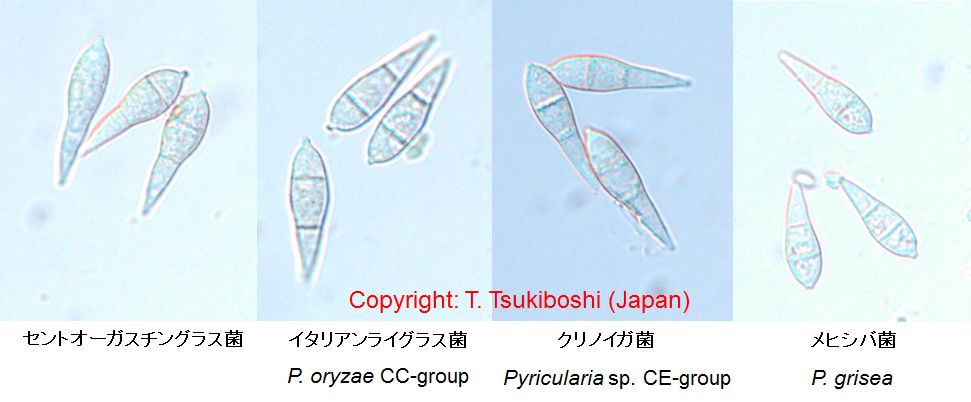
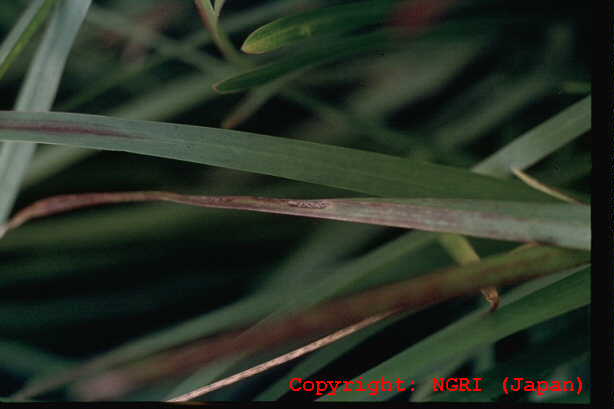
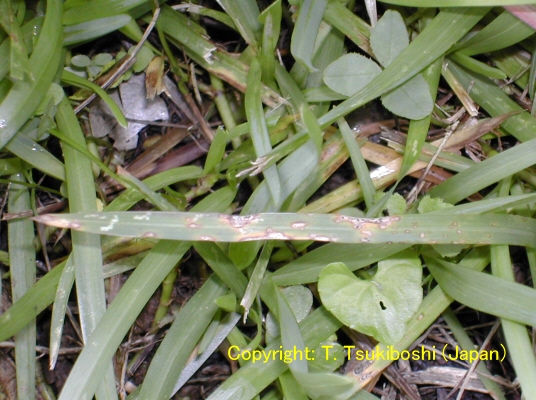
The disease was observed in the southern regions of Japan in 2008 and 2012. Lesions are spindle-shaped, grayish-brown in the border, grayish-white in the center, 2-10×1-2mm in size, and later enlarge and coalesce to each other reaching 20×5mm. The causal organism is P. oryzae CC-group same with the fungi from rice and ryegrass, but only pathogenic to the host and not to rice and ryegrass. |
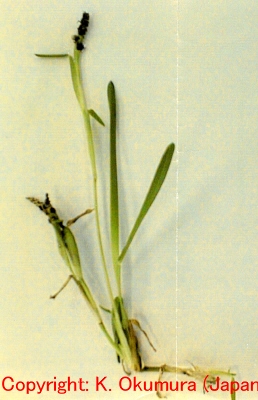 |
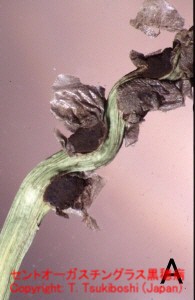
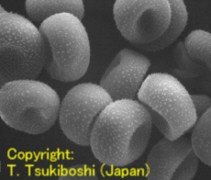
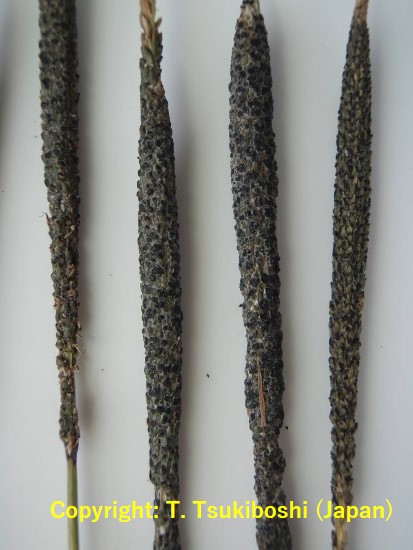
The disease was observed in Nakijin, Okinawa Pref., the most southern region of Japan, in May 1998. At the heading, the surfaces of seeds are covered with thin, grayish peridium. Soon after, the peridium tears and exposes blackish brown powder (clamidospores of the pathogen). Since all parts of the inflorescences were infected, only the rachis are left after scattering the spores. |
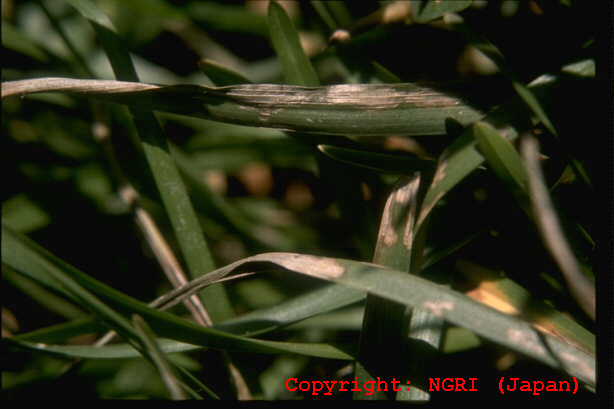 |
Ash green and water-soaked lesions appears at first and the whole infected plant soften like being boiled before long. Then, the infected stalks and leaves fall one upon another and rot when the disease progresses and hyphae like spider' web appear covering all the infected part. Later light brown to brown sclerotia of about 5mm in diameter are produced on the infected part. At this point, the infected grass withers forming patches and the grassland gradually becomes bare land. The causal organism is polyxeny and can infect most grasses and legumes of herbage. |
 |
 |
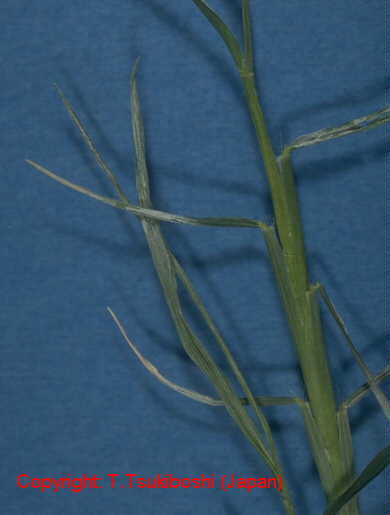 |
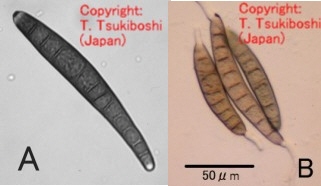
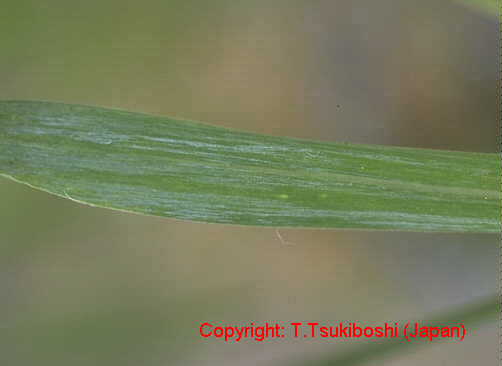
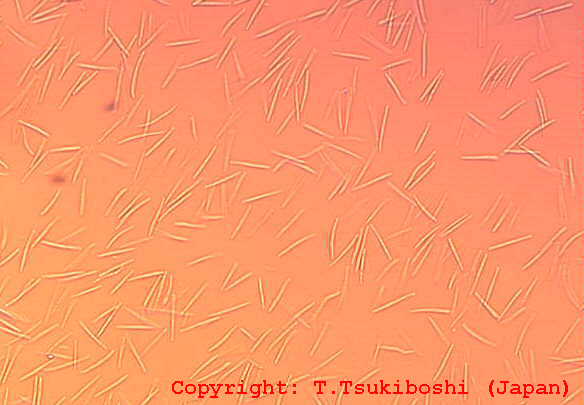
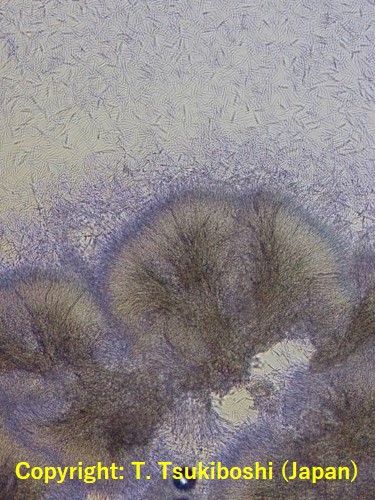
Fungal disease which causes head blight and occurs mainly in the warm regions. After heading, the whole infected heads are covered with gray to black colony. Later the fungus fasten each head spike and the whole head looks grayish black moldy. White colony appears on the surface of the leaf like the sripe along the leaf vein. It is reported that the causal organism is infected in the entire plant as an epiphyte and the infected plant becomes resistant to insects such as grasshopper. |
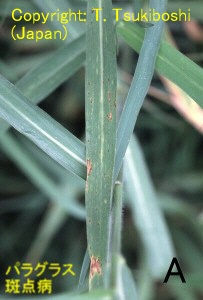 |
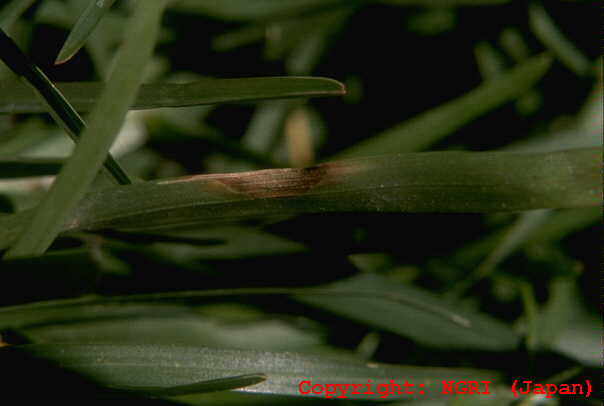
Fungal disease producing spots in leaves. The disease was found in Ishigaki, Okinawa Pref., the most southern region of Japan in March 1998. Lesions are at first brown small spots, and then elongate to yellowish brown, oblong to spindle-shaped, 0.5-2 x 0.1-0.5cm in size with brown borders. Later the lesions fuse together to irregular-shaped ones and produce yellow halo around them. |
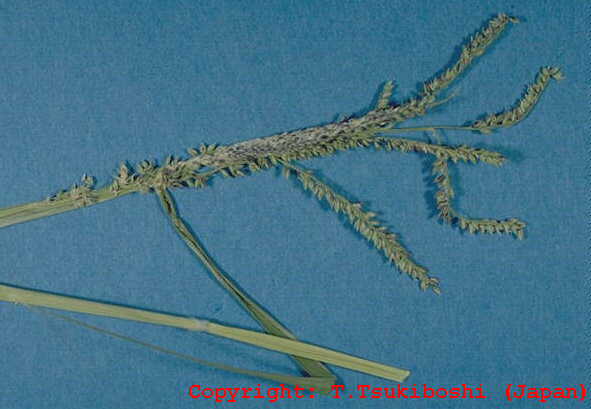 |
Fungal disease which causes head blight and occurs mainly in the warm regions. After heading, the whole infected heads are covered with gray to black colony. Later the fungus fasten each head spike and the whole head looks grayish black moldy. White colony appears on the surface of the leaf like the sripe along the leaf vein. It is reported that the causal organism is infected in the entire plant as an epiphyte and the infected plant becomes resistant to insects such as grasshopper. |
 |
Fungal disease which causes head blight and occurs mainly in the warm regions. After heading, the whole infected heads are covered with gray to black colony. Later the fungus fasten each head spike and the whole head looks grayish black moldy. White colony appears on the surface of the leaf like the sripe along the leaf vein. It is reported that the causal organism is infected in the entire plant as an epiphyte and the infected plant becomes resistant to insects such as grasshopper. |
 |
Fungal disease which causes head blight and occurs mainly in the warm regions. After heading, the whole infected heads are covered with gray to black colony. Later the fungus fasten each head spike and the whole head looks grayish black moldy. White colony appears on the surface of the leaf like the sripe along the leaf vein. It is reported that the causal organism is infected in the entire plant as an epiphyte and the infected plant becomes resistant to insects such as grasshopper. |
 |
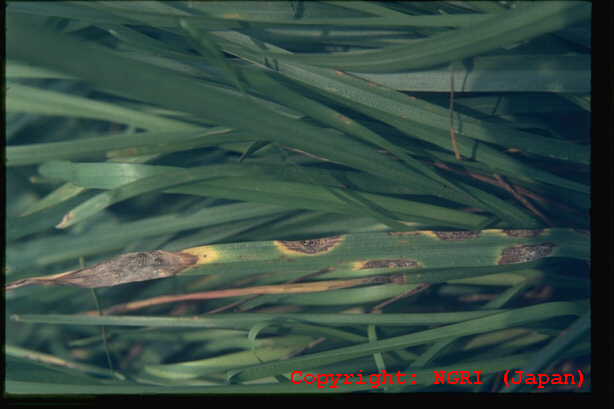
Fungal disease which causes spot in leaves and newly repoerted in 2004 in Japan. The lesions are gray brown, spindle- to irregular-shaped, 3-5 x 1-2mm with brown to reddish brown border. The fungal tissues, setae, are produced in the center of the old lesion and looks black moldy. Masses of spores are formed on the lesion under wet conditions and they disperse by wind and rain. The disease occurs from the rainy season to summer. The species of the pathogen is same with that of zoysiagrass.
|
 |
 Return to top