 |
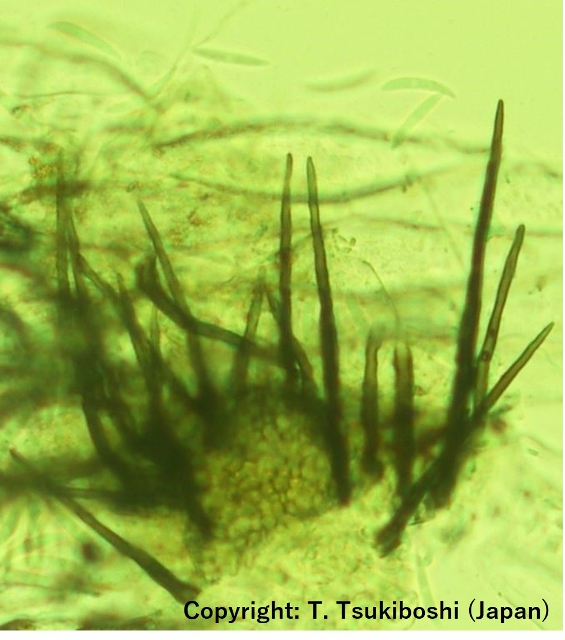
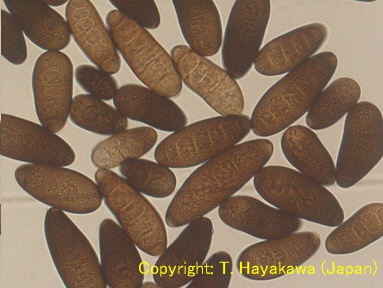
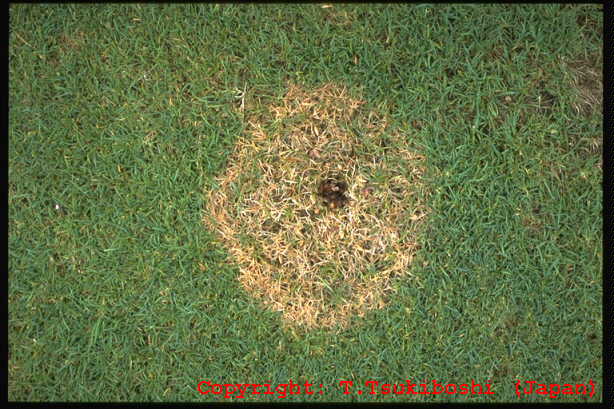
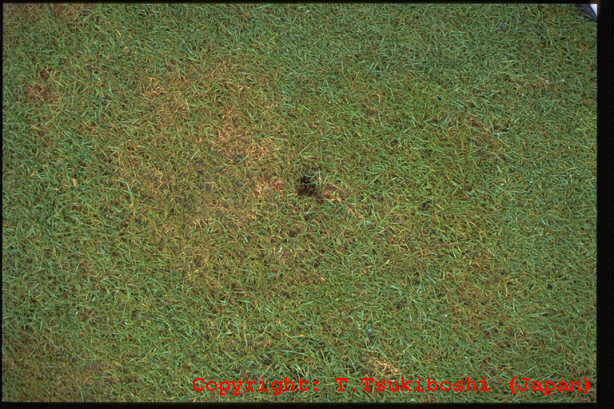
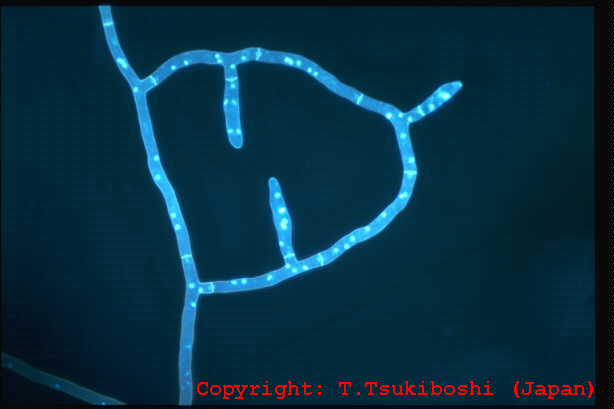
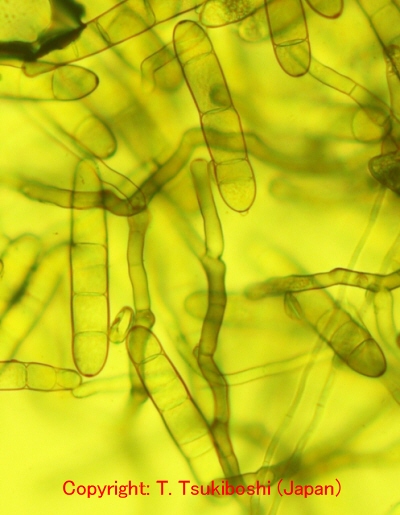
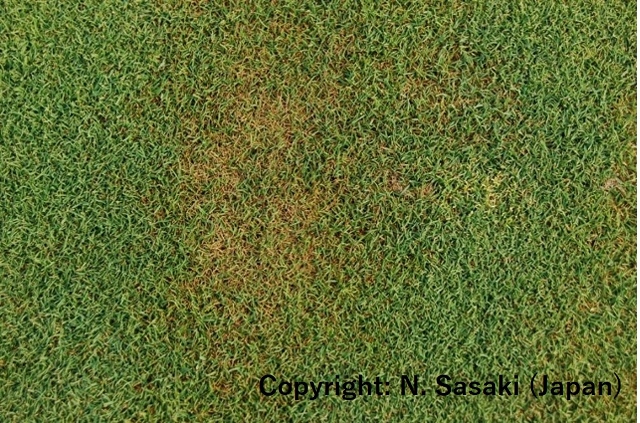
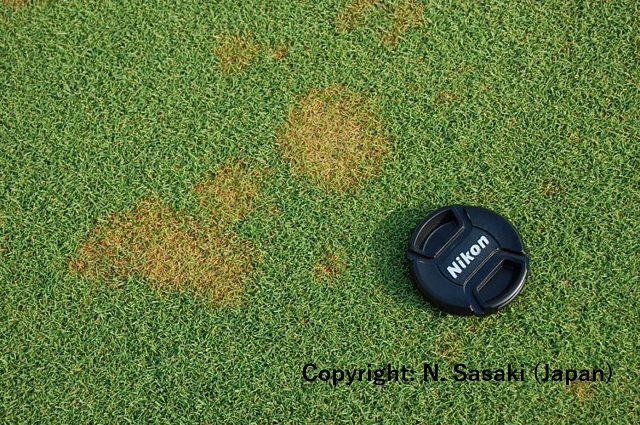
Important fungal disease increasing from 1990s mainly in the south regions of Japan. The disease begins to occur from early spring and continue until early autumn mainly in August to October. Small and brown to blackish brown spots appear at first, then turn to brown to reddish brown and irregular patches (sometimes reaching 1 m in diameter) with opaque borders, especially under high temperature. Yellow to brown lesions are produced on the leaves in the patches, bearing small acervuli with black setae. Pink to orange colored spore masses are produced in the acervuli, containing crescent to falcate spores that disperse by rain, wind and mowing machines. The disease severity is enhanced by mixed infection with Pythium. |
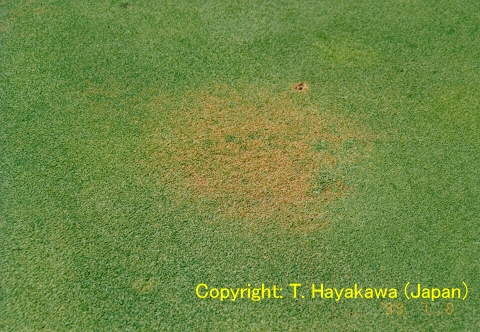 |
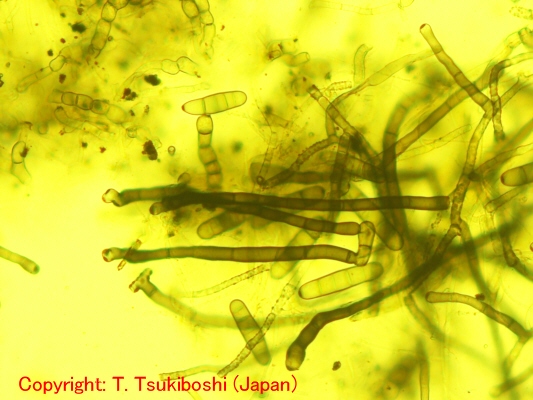
Fungal disease occurring on creeping bentgrass green of golf-course mainly in east Japan. The disease occurs from spring to autumn and produced middle-sized patches of light brown, circular to irregular. Leaves of the diseased individuals rotten brown and brown spots were sometimes produced on the leaves. The pathogen infects many kind of grasses such as rice, wheat, barley, ryegrass, fescue, orchardgrass and etc. causing leaf spot. |
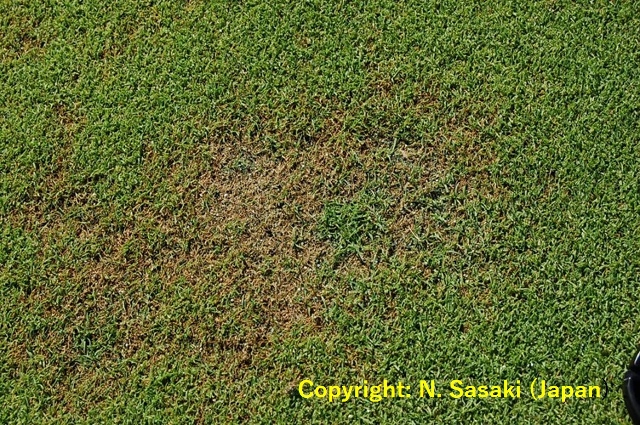 |
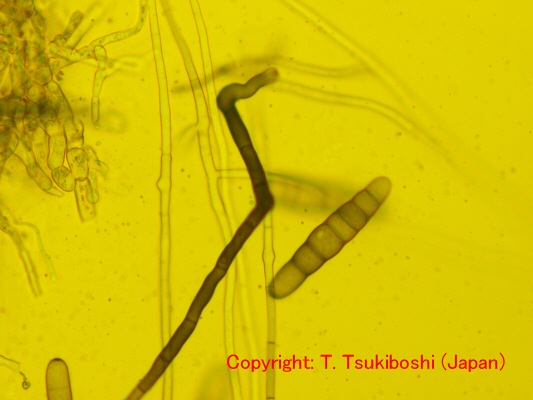
The disease produces dark brown patches in diameter of 2-3 to 10 cm around August. It is characteristic that infected plants in the patches show dark brown leaf and stem blight. The pathogen has pathogenicity not only in bentgrass but also in perennial ryegrass, tall fescue and Kentucky bluegrass. |
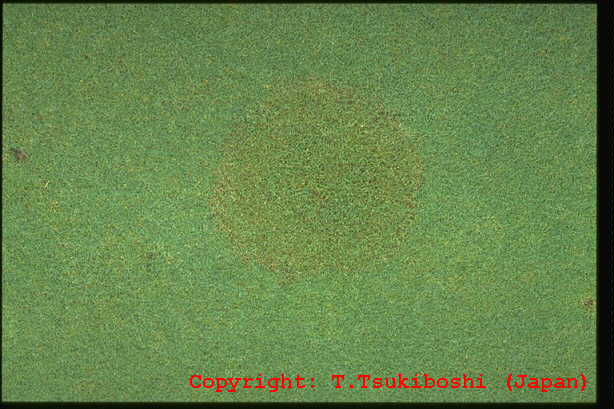 |
Important fungal disease occurring all over the country and the damage is large. The disease begins to occur at the beginning of the rainy season and produces indistinct patch. Later the patch becomes to dark brown in all, round, large patch of about 1m in diameter. Most of the pathogen are AG-2-2 IIIB, AG-1 IB is considered to cause the disease considerably frequently in the north of Kanto.
|
 |
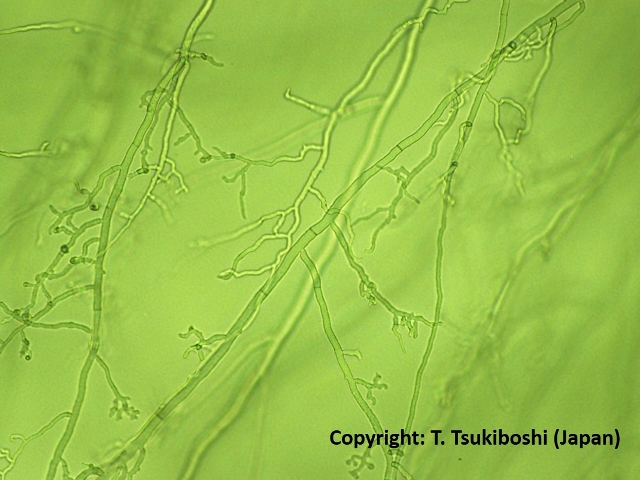
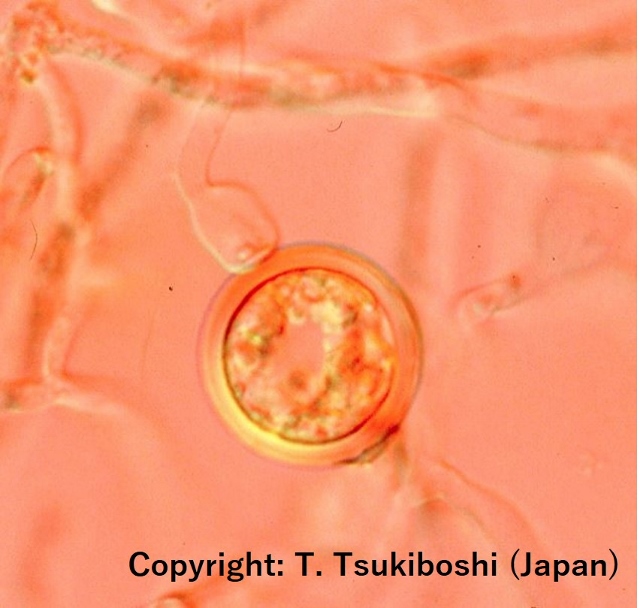
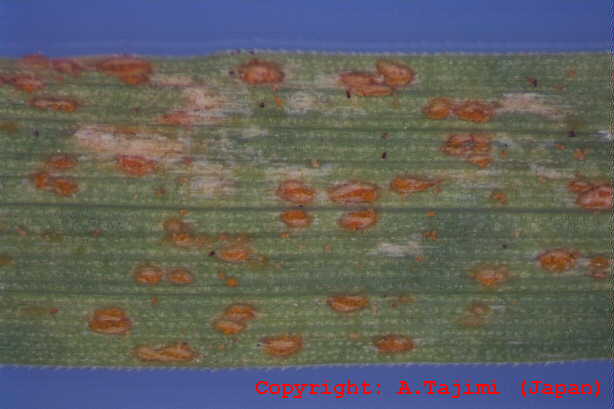
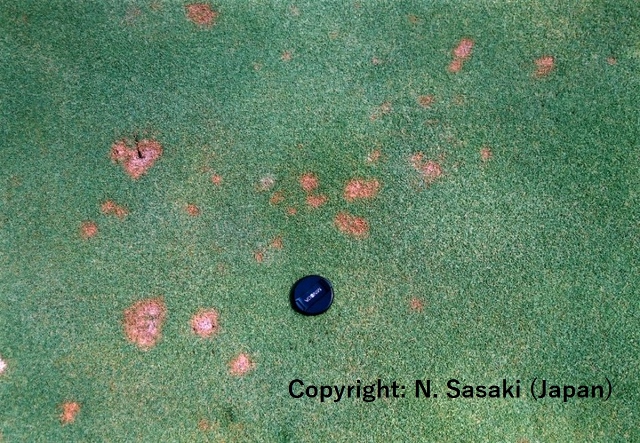
Recently the occurrence is increasing in June to September in golf course, Japan. The disease produces round and copper-colored to whitish gray patches in diameter of 2 to 7 cm, and they coalesce later, resulting irregular patches. It resembles dollar spot disease in symptoms but differs in reddish patches with opaque borders. The pathogen is same with that of sorghum zonate leaf spot and sometimes produces reddish brown and zonate lesions on the leaves. It is characteristic to produce black microsclerotia in diameter of around 0.2 mm in the infected plant tissues. It produces pink to orange colored masses on the lesions containing many filamentous conidia that disperse by rain and wind. The optimum temperature for the hyphal growth is 25 to 28C. The pathogen causes same disease also in Zoysia grass. |
 |
 |
The disease produces small patches in diameter of 2-5cm and occurs from late spring to early autumn, mainly in July to September. The pathogen grows maximumly at 25C, but the infected plants are often killed under summer heat, the disease is usually recognized as a disease in summer periods. The symptom is like that of dollar spot, but it can be diagnosed based on the reddish color of the patches and the absence of aerial hyphae early in the morning. The pathogen has strong pathogenicity also on perennial ryegrass and bermudagrass. Black and small grains are rarely produced on the infected stems and leaves, that are pseudocethia containing clavate ascospores.
|
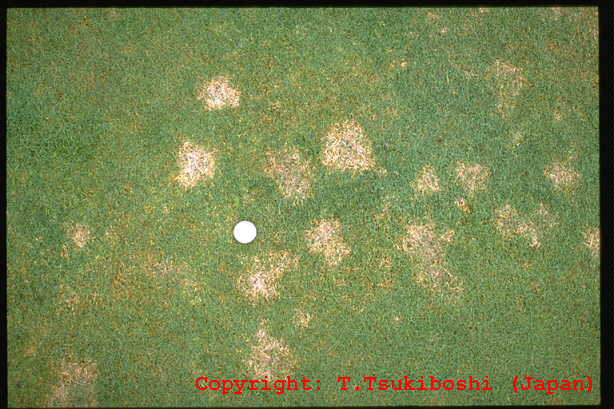 |
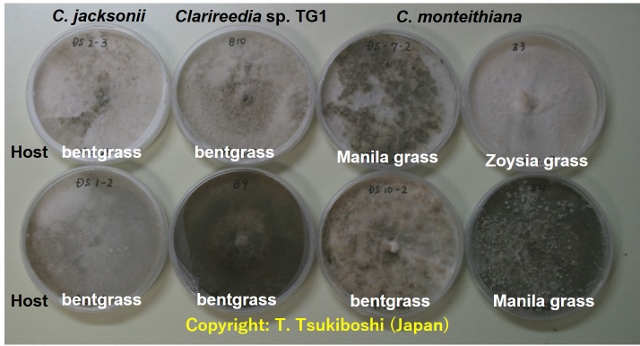
Important fungal disease occurring all over the country and the damage is large. It produces white to gray, round to oval patch of 2-3 cm in diameter a lot from May to July and September to November. The pathogens were recently identified as three species of Clarireedia and those from cool season turfs are mainly classified as C. jacksonii and those from warm season turfs as C. monteithiana.
|
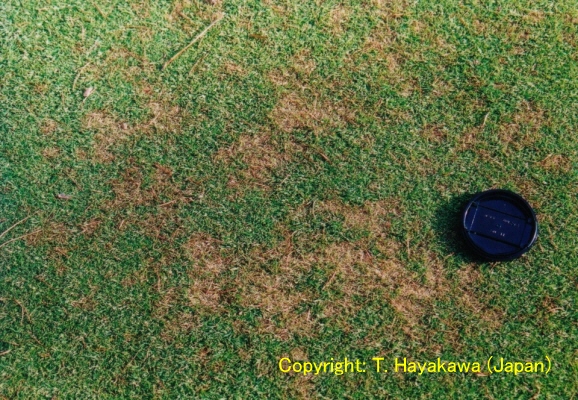 |
Fungal disease occurring on creeping bentgrass green of golf-course mainly in central to east Japan. The disease occurs at cool or warm seasons and produces patches of light brown to brown, spot-like or irregular. Leaves of the diseased individuals rotten brown and grayish white spots surrounded with brown margins were sometimes produced on the leaves. The pathogen includes three species of Drechslera, but no differences were observed in symtoms by aritificial inoculation in bentgrass. D. catenaria is known as a pethogen of leaf blight in American sloughgrass and D. erythrospila as that of leaf spot in redtop. |
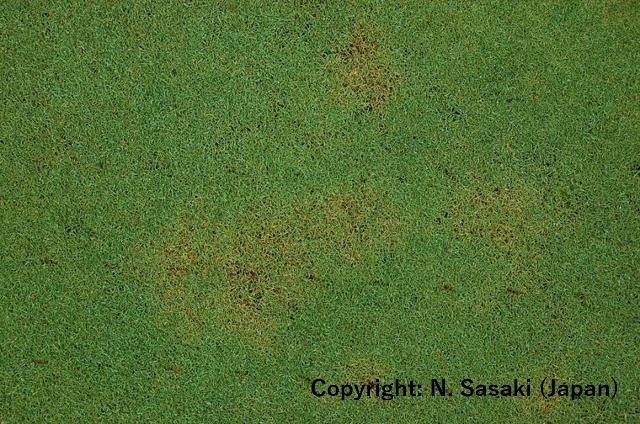 |
The patches are dark green and around 10 cm in diameter at first. After the rainy season in June. They enlarge quickly, resulting yellow to brown, irregular and large-sized patches maximumly 2 m in diameter. Since the under-ground parts, roots and crowns are invaded by the pathogens, the patch usually shows sinking symptom rather than leaf blight. The disease called as yellow patch and has been thought to occur early spring or autumn, since the pathogens such as P. graminicola, P. vanterpoolii and P. volutum prefer relatively low temperature of 20 to 25C and rare to occur in mid-summer. But recently the pathogens such as P. arrhenomanes and Pythium sp. that prefer high temperature more than 30C increase and cause severe damage in Japan under the global warming. |
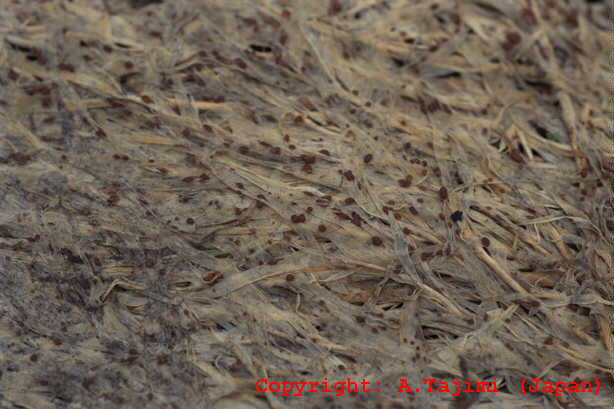 |
Fungal disease which causes plant death and occurs mainly in Hokkaido, the most northern part of Japan. The symptom is similar that of T.ishikariensis, but the sclerotia formed on the surface of withering part is reddish brown and millet grain size. The sclerotia is formed on the stalks, leaves, and roots, etc. of the withering plant. The pathogen is more saprophytic than T.ishikariensis and is considered to invade after invasion of T.ishikariensis and occur mixingly with it. |
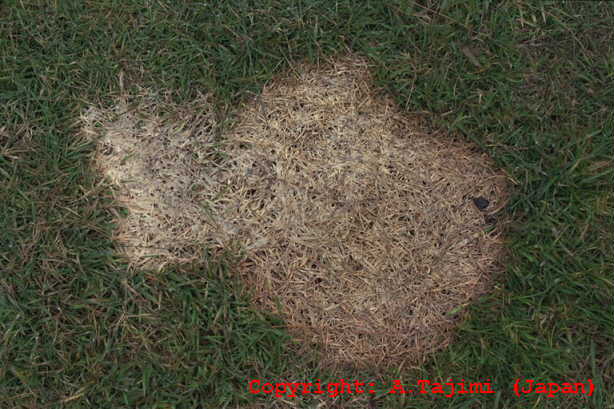 |
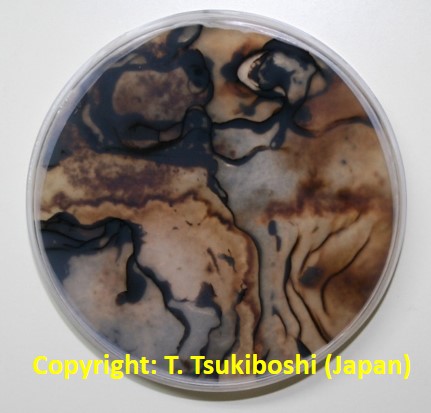
Fungal disease which causes plant death and occurs mainly in Hokkaido Dist. The symptom appears just after snow-melting as large patches. Stems and leaves become water-soaked and softened like boiled. When they are dry, they discolor to ash brown. Dark brown to black, globular to irregular sclerotia of 0.5-1mm in diameter are produced on them. |
 Return to top