 |
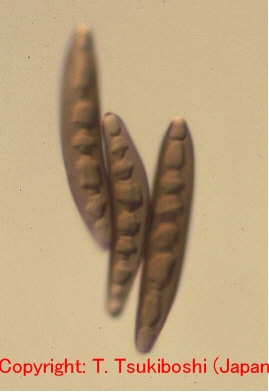
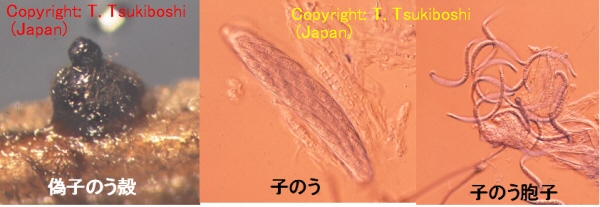
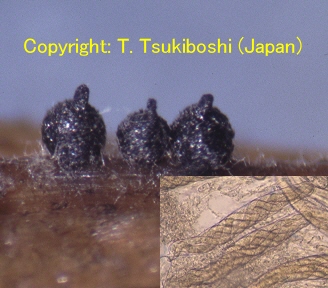
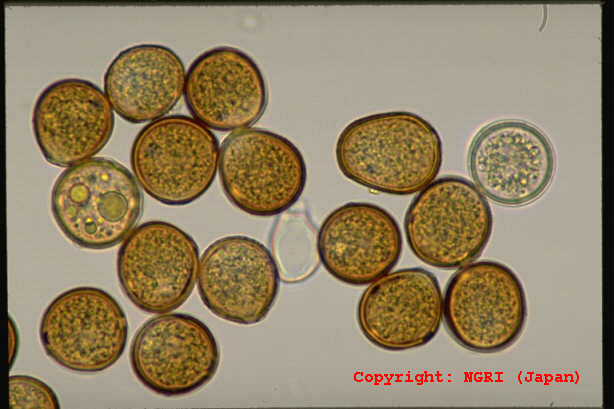
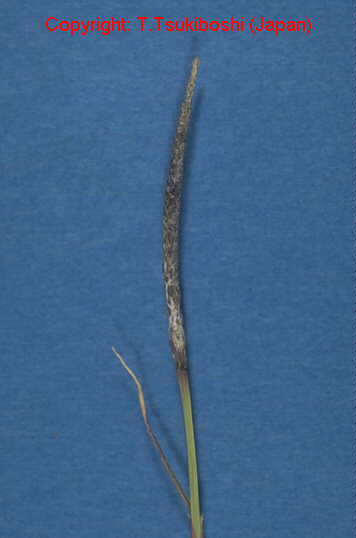
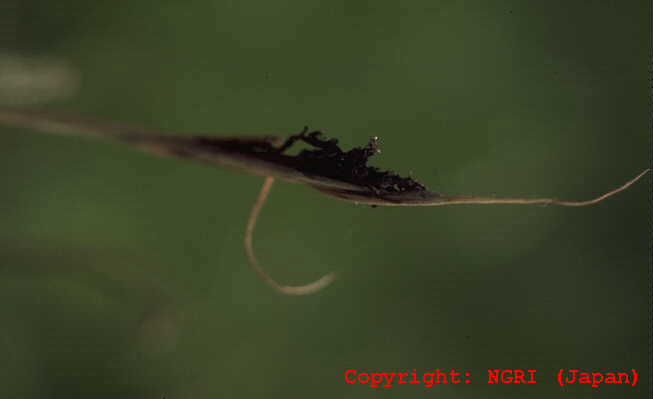
Fungal disease which causes head blight and occurs mainly in the warm regions. After heading, the whole infected heads are covered with gray to black colony. Later the fungus fasten each head spike and the whole head looks grayish black moldy. White colony appears on the surface of the leaf like the sripe along the leaf vein. It is reported that the causal organism is infected in the entire plant as an epiphyte and the infected plant becomes resistant to insects such as grasshopper.
|
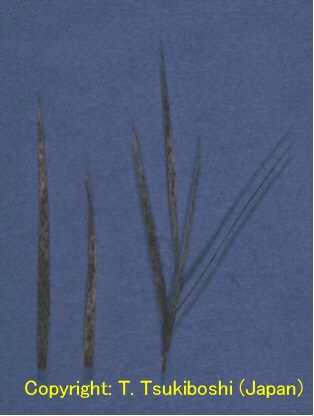 |
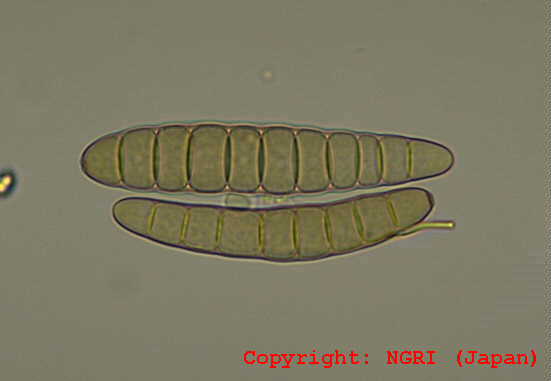
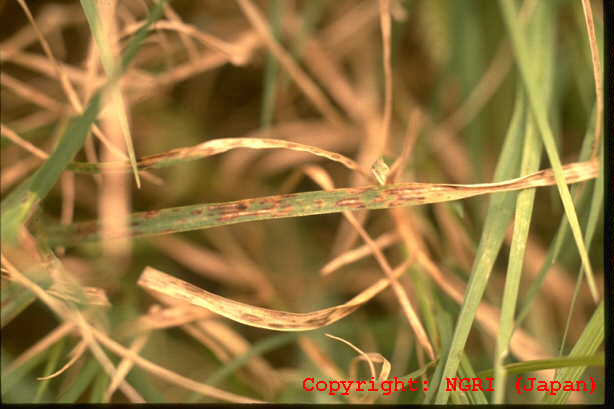
Fungal disease causing leaf blight in spring or autumn. The disease produces dark brown stripe of 2-5 mm in length and 0.5-1 mm in width mainly in the leaf. The leaf turns to yellow and withers when occurring severely. The teleomorph of the causal organism is not found on the plant body in nature. The pathogen is same with that of zoysia grass causing brown stripe. |
 |
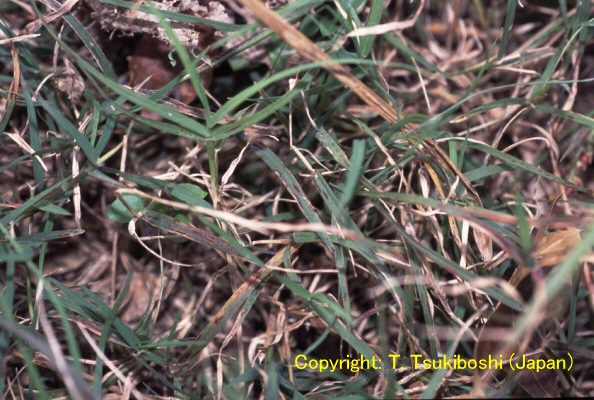
Representative fungal disease of bermudagrass causing leaf spot in leaves and sheaths. Lesions are ovao to irregular-shaped, grayish to greenish brown, 3-5 x 1-2mm with dark brown border. If occurring severely, whole leaves turn to tan brown to straw color. In turf, it causes a patch disease.
|
 |
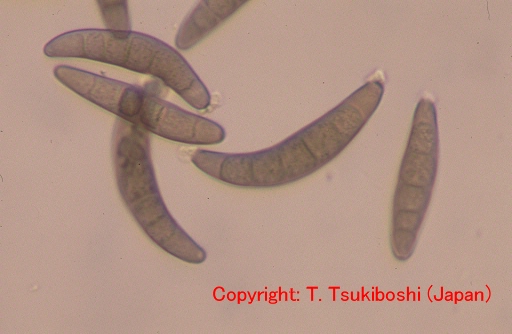
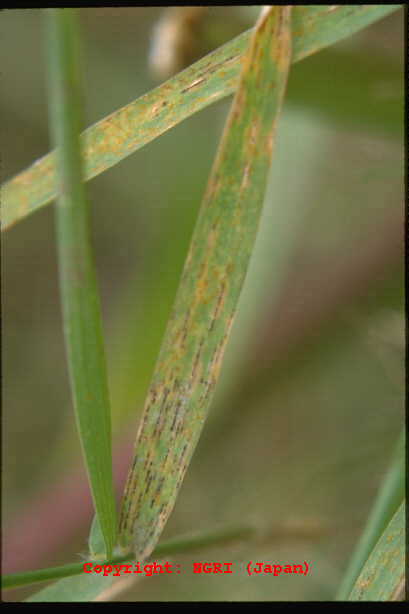
New disease that occurred in Tottori Pref., the western region of Japan, in October 2003. Fungal disease which causes spot in leaves and sheaths. Lesions are oval to spindle-shaped, brown to purplish brown, 2-8 x 1-2mm. If occurring severely, whole plant dies. |
 |
 |
 Return to top