 |
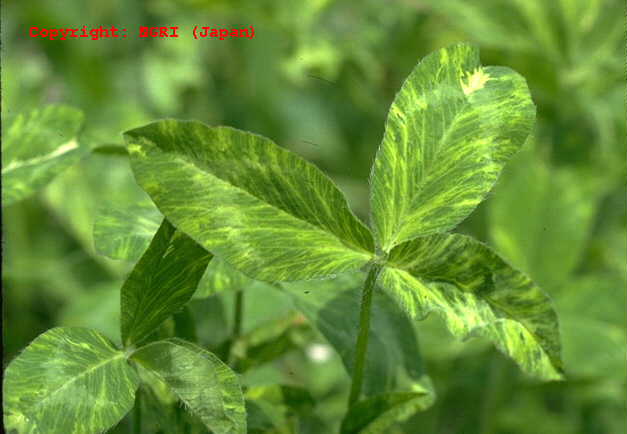
Typical viral disease. Most individuals are infected at the second or third year from seeding in the warm regions. The symptoms begin to appear in spring and are various such as yellow mosaic, green mosaic, chlorotic spots, rugose, etc. according to the varieties of plants and environmental conditions. The virus is transmitted by sucking of the various aphids. The main ones of the causal virus are AMV, BYMV and WCMV though four kinds are reported. The strains of the virus can be roughly estimated by the symptom.
|
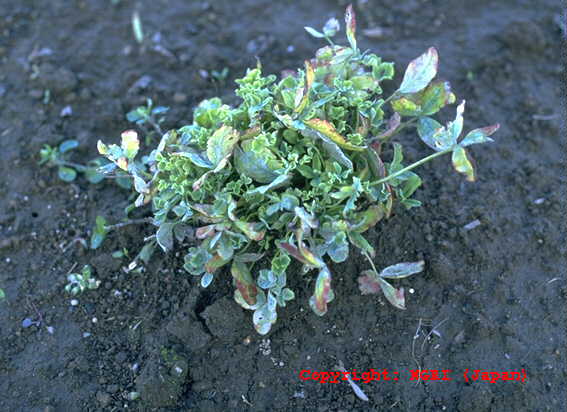 |
Phytoplasma disease causing shrinkage of the plant. The disease mainly occurs in red clover. A lot of small leaves at first appear from the center part of the plant. These leaves turn to reddish brown or fade. The plant gradually begins to rosette and wither. The causal organism is transmitted by some kinds of leafhoppers. |
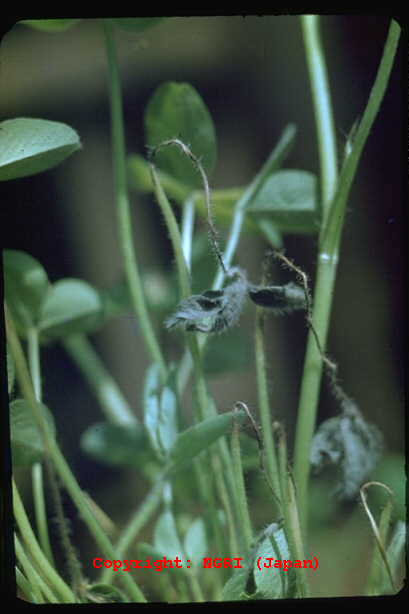 |
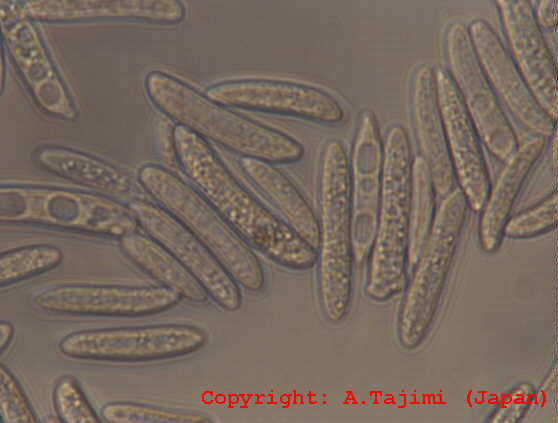
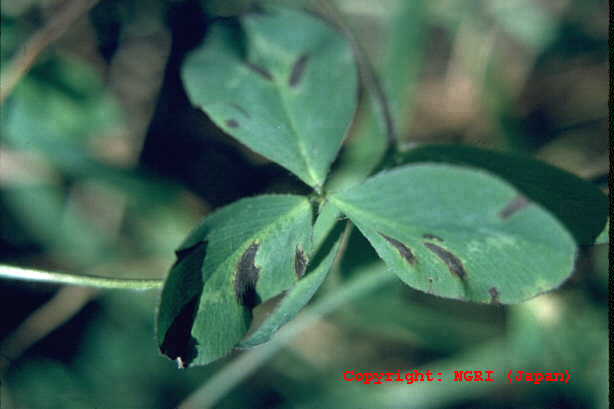
Fungal disease occurring from summer to autumn and causing large damage in the warm regions. It occurs in the leaf, stalk and petiole and produces yellowish brown, spindle shaped lesions sinking a little with black mold (setae) in the center part. The upper part of the lesion often withers and the entire plant is killed in results when occurring severely. The causal organism can infect alfalfa, too.
|
 |
Fungal disease which causes leaf blight occurring in the cool region. The lesion is formed from the leaf rim and becomes black brown and V letterform with yellow surroundings. The small black grains (perithecia) are formed on the surface of the lesion, and ascospores are dispersed by wind and rain. The causal organism can infect other clovers, but their pathogenicities are differentiated. |
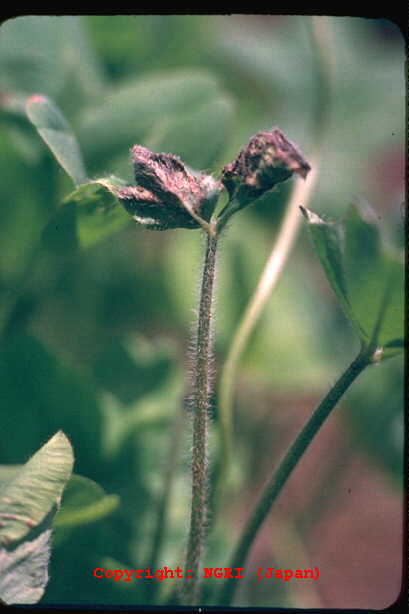 |
Fungal disease occurring in the entire upper-ground part. The lesions are blackish brown and irregular shaped ones in the leaf. They soon fuse mutually and become large lesion which covers the whole leaf. The black and fluffy sclerotia are produced in the center part of the lesion. Black hyphae extends to the entire plant when occurring severely and cause plant death. The causal organism produces the alkaloid, suraflamine, which causes goat's slaver disease. |
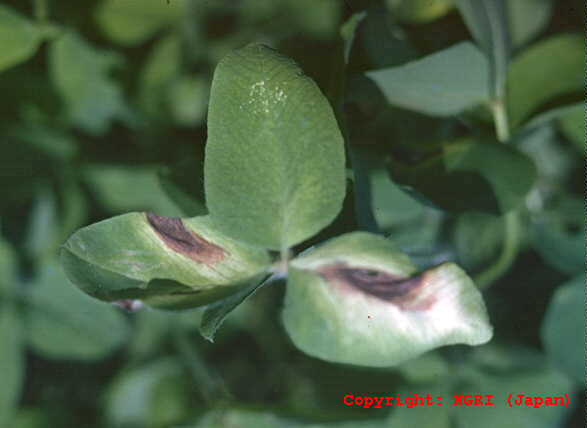 |
Fungal disease which produces spots in the leaf. The lesions at first appear as yellow discolored parts, and soon they turn to brown and become characteristic V letterform lesions devided by the leaf vein. When the petiole is infected, the leaf withers and are killed soon. When occurring severely, the whole plant looks like burned and the yield decreases much. Damage is large in younger leaves than old ones. It occurs severely when the temperature increases considerably after the rainy season. The pathogen infects other clovers. |
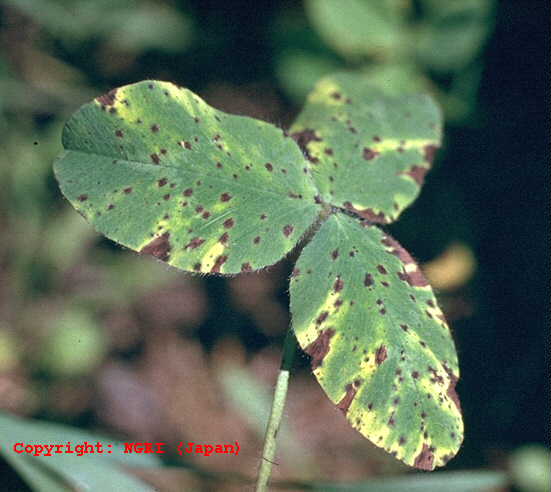 |
Typical spot-causing fungal disease of clover. Since the disease occurs severely in cool and wet conditions, the damage is large in Hokkaido, the northern part of Japan. Many brown to blackish brown spots are at first produced and enlarge gradually, but they often remain of 1-3 mm in diameter. Dark brown perithecia like warty are produced in the center part of the lesion later and this part becomes like jelly at wet conditions and disperses spores. A lot of leaves are diseased and wither when occurring severely. The species of the causal organism is different from common leaf spot fungi of alfalfa. The disease occurs in white clover and alsike clover, too. |
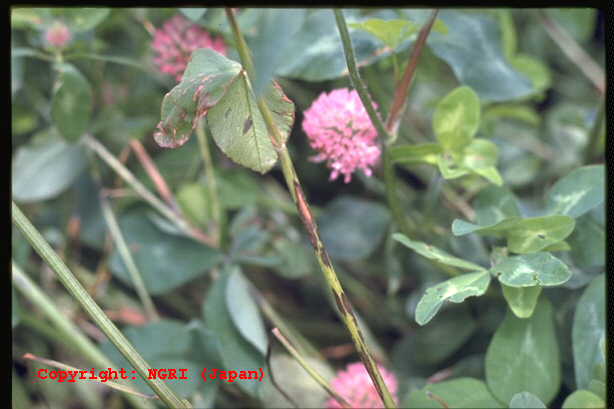 |
Fungal disease mainly occurring in stalk, petiole and spikelet of red clover. The lesions are black brown, spindle shaped, 1-3 cm in length. They often sink in the center part and the leaf tears from the part. The causal organism prefers the cool and wet conditions and is occurring mainly in Hokkaido in spring and autumn. |
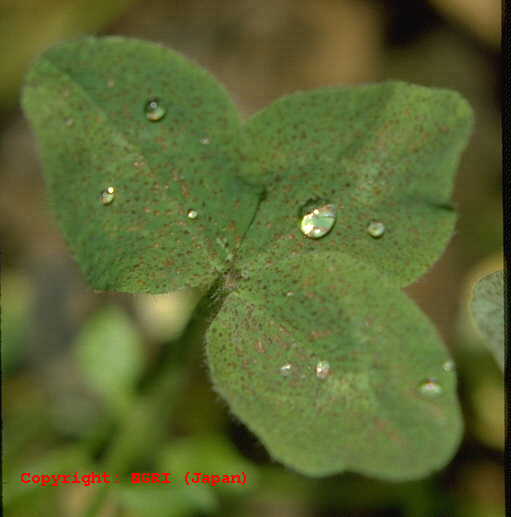 |
Spot-causing fungal disease occurring in the cool regions. The blackish brown, small lesions of 1-2 mm in diameter are produced a lot and the whole leaf looks like sprinkled with black pepper. The surroundings of the lesion turn to yellow gradually and the leaf withers finally. It occurs severely in the cool condition with frequent rain. Black small grains (perithecia) are formed on the old lesions. The species of the causal organism is different from pepper spot fungus of alfalfa. |
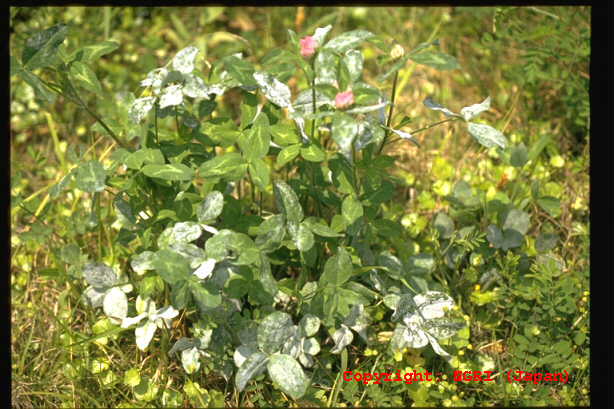 |
Fungal disease occurring a lot especially in red clover. It rapidly spreads to the whole country after the occurrence in Hokkaido in 1975 for the first time. White, thin and indistinct colonies like sprinkled white powder are produced on the surface of the leaf in the early spring. They gradually become thick, cover the whole leaf and cause leaf blight. The disease occurs severely in the cool and dry condition, and the damage becomes large when sunshine is insufficient under the cloudy weather. The causal organism can infect wide ranges of legumes such as alsike clover, white clover and vetches.
|
 Return to top