 |
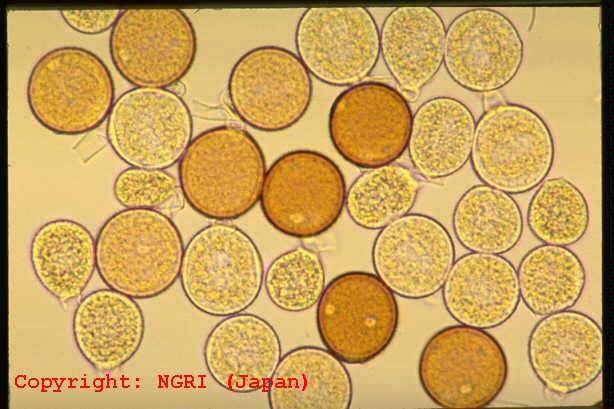
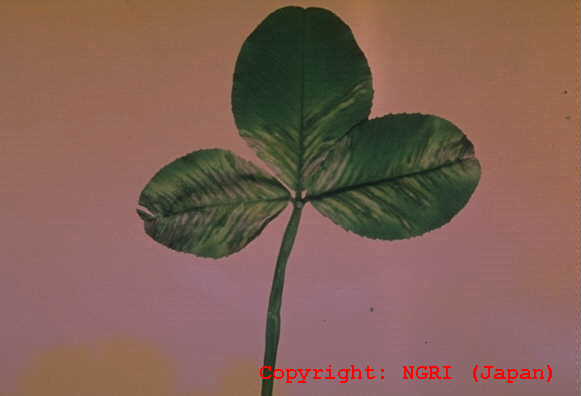
Most individuals are infected at the second or third year from seeding in the warm regions. The symptoms begin to appear in spring and are various such as yellow mosaic, geen mosaic, chlorotic spots, rugose, etc. according to the varieties of plants and environmental conditions. The virus is transmitted by sucking of the various aphids. |
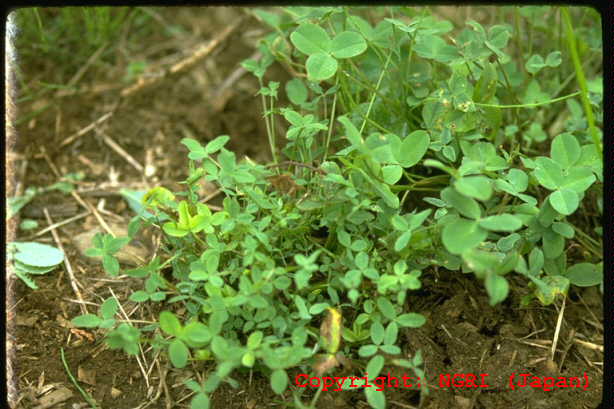 |
Mycoplasm-like organism disease causing shrinkage of the plant. A lot of small leaves at first appear from the center part of the plant. These leaves turn to reddish brown or fade. The plant gradually begins to rosette and wither. The causal organism is transmitted by some kinds of leafhoppers. |
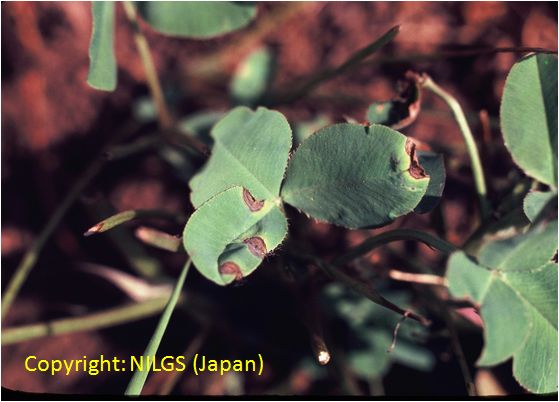 |
Fungal disease occurring in the entire upper-ground part. The lesions are blackish brown and irregular shaped ones in the leaf. They soon fuse mutually and become large lesion which covers the whole leaf. The black and fluffy sclerotia are produced in the center part of the lesion. Black hyphae extends to the entire plant when occurring severely and cause plant death. The causal organism produces the alkaloid, suraflamine, which causes goat's slaver disease. |
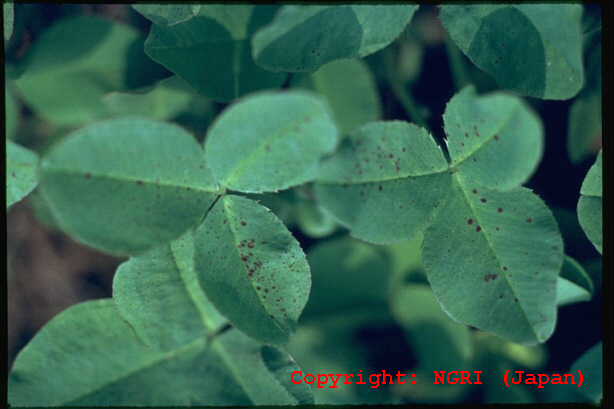 |
Spot-causing fungal disease occurring in the cool regions. The blackish brown, small lesions of about 1 mm in diameter are produced a lot and the whole leaf looks like sprinkled with black pepper. The surroundings of the lesion turn to yellow gradually and the leaf withers finally. It occurs severely in the cool condition with frequent rain. Black small grains (perithecia) are formed on the old lesions. The species of the causal organism is different from pepper spot fungus of alfalfa. |
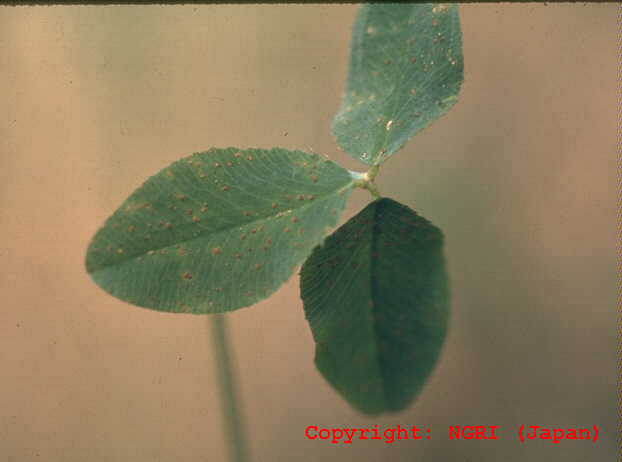 |
Rust disease occurring in Hokkaido, Tohoku Dist. and etc., the northern part of Japan. The causal organism can infect subterranean clover, but infect neither red clover nor white clover. |
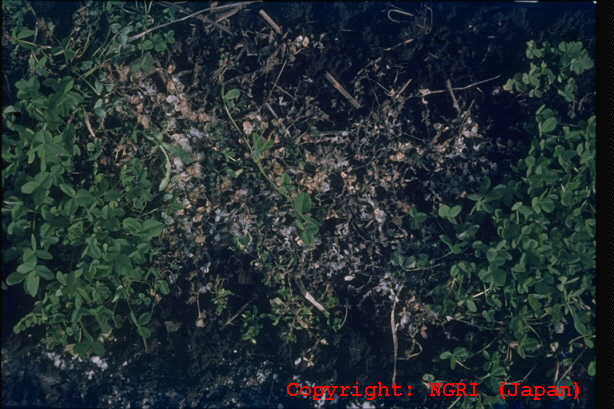 |
Important fungal disease which causes plant death occurring in cool and wet regions. The small spots appears at first and then the leaf and stalk turn to yellow and wither. The disease progresses gradually under the snowfall. The stem, leaf and root rot to ash white according to increase of the temperature after snow-melting in the spring of next year. White and fluffy hyphae are produced on the surface of the withering plant and large black sclerotia of irregular types and about 8-10mm in size are produced before long. They germinate in autumn and produce light brown stroma of 3-8 mm in diameter. The ascospores spread from the stroma and the infection happens again. The host range of the causal organism is wide including alfalfa and vetches. |
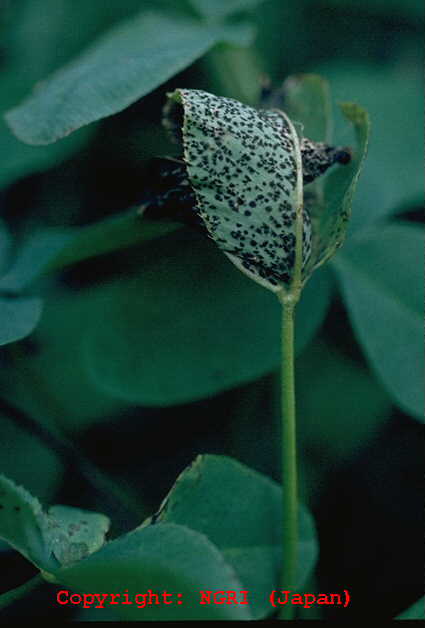 |
Leaf blight causing fungal disease occurring in the cool region. Black sooty molds are produced in the back side of the leaf. These are like black, irregular shaped, small lesions bristly in the leaf. The infected leaf keeps green at first but gradually turns to yellow. It occurs in other clovers. |
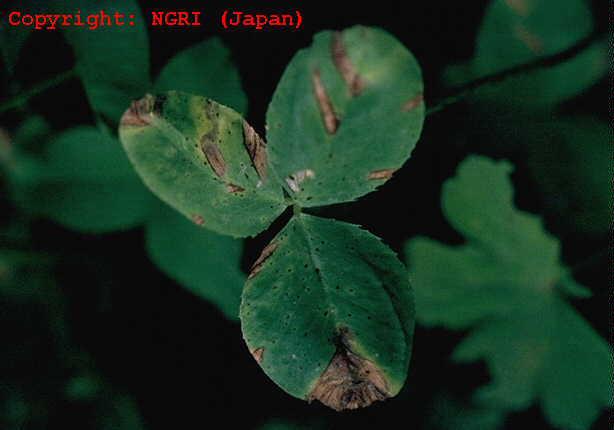 |
Spot-causing fungal disease mainly occurring in the leaf and stalk. The lesions are grayish brown devided by leaf veins, fuse mutually and cause leaf blight. They become purple brown stripes when occurring in the stalk and the damage enlarges. The causal organism can infect other kinds of clovers, but the pathogenicity is considered to be differentiated. |
 Return to top