 |
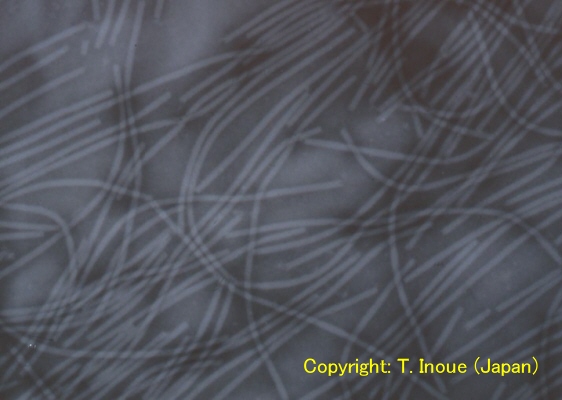
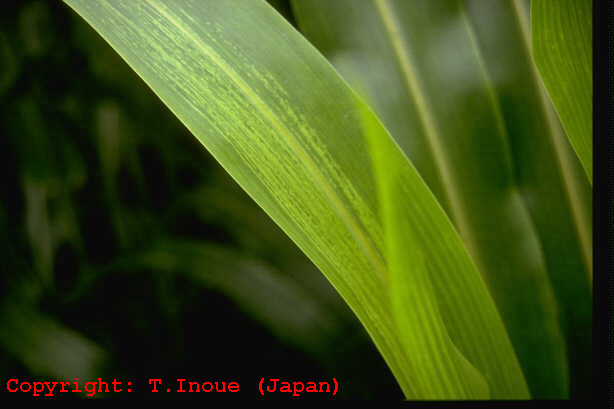
The symptom is similar to corn. The causal virus, ScMV, is a same strain of that from corn and shows distinct pathogenicity to corn. |
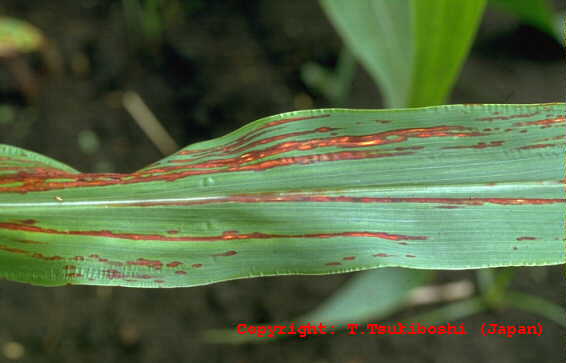 |
Spot-causing bacterial disease occurring severely in the warm regions especially during the rainy season. Lesions are at first like short lines, but extends to long, red purple streaks of 2-20cm or more in length later. When the disease progresses, the lesions fuse mutually and the infected leaf withers in results. Bacterial ooze appears on the surface of fresh lesions under the high humidity condition and it becomes a disease spreader. The pathogen is a same species with that from corn, but some detailed characters may differ from it.
|
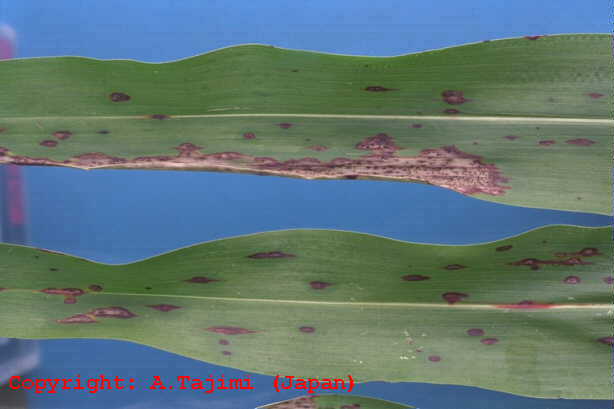 |
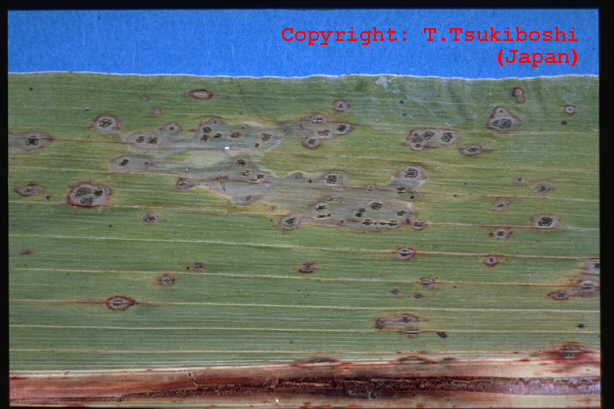
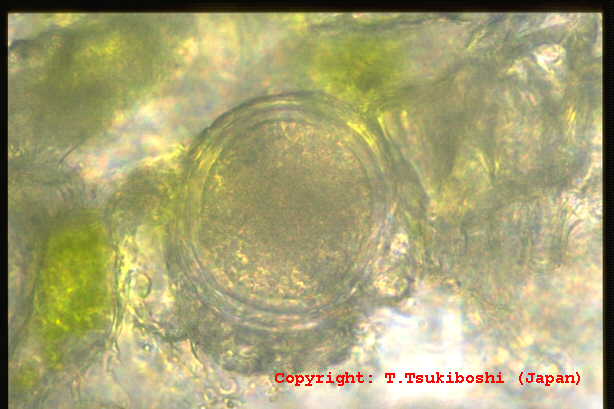
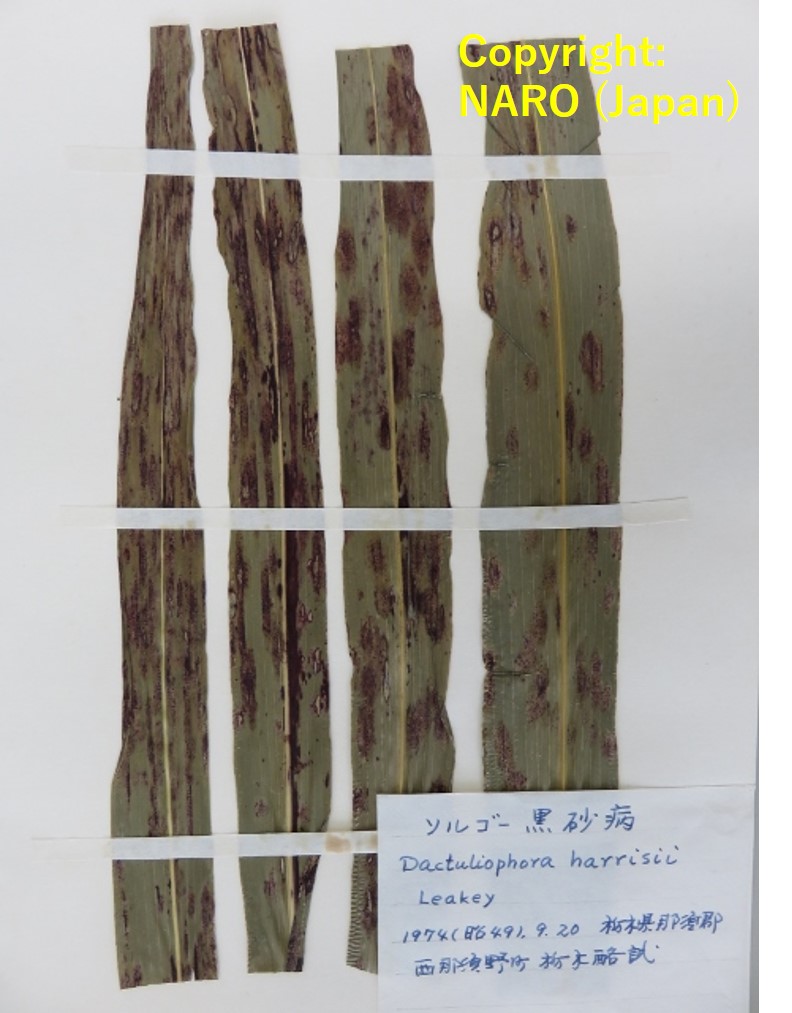
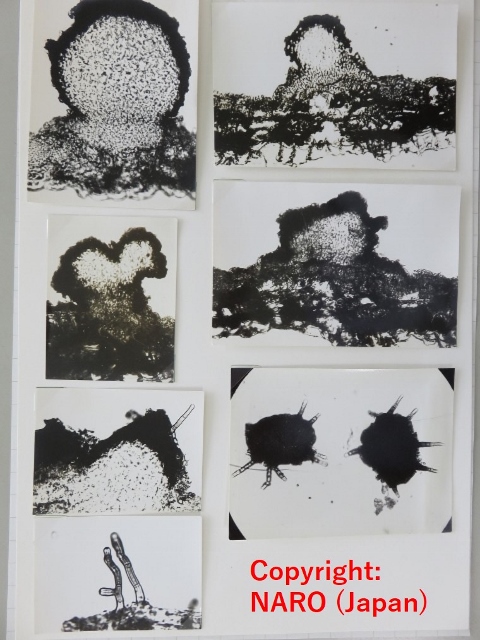
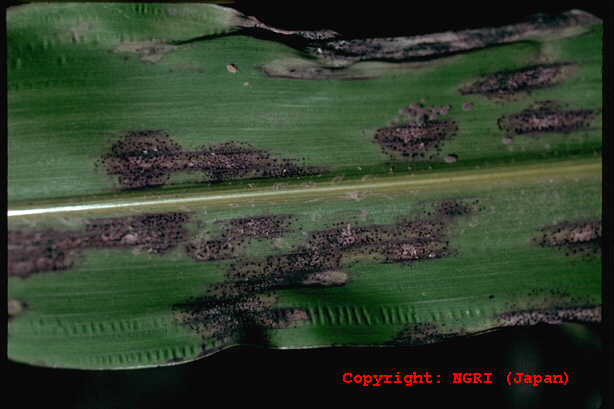
Most important fungal disease in the world. Few occurrences have been reported in Japan, but it is increasing recently with global warming in Japan. Small round spots is formed in the leaf at midsummer. They expand gradually and become yellowish brown to ash white lesions with reddish brown to purple border. They fuse mutually and become irregular shape. It is characteristic that the center of the lesion becomes black moldy because of production of setae, fungi tissues. Slimy mass of spores are formed among the setae, and these disperse and spread by wind and rain. Since the species of the causal organism is different from the anthracnose pathogen of corn, orchardgrass and ryegrass, it is pathogenic only to sorghum. |
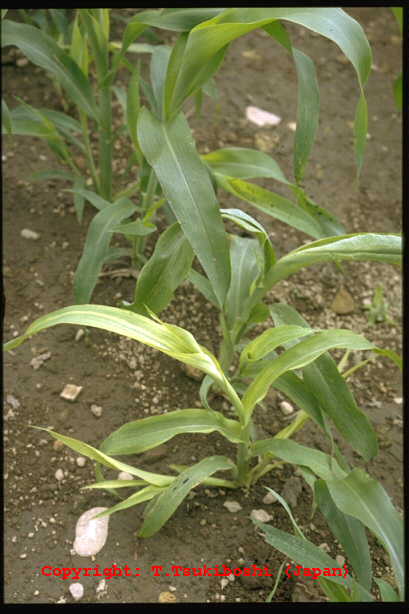 |
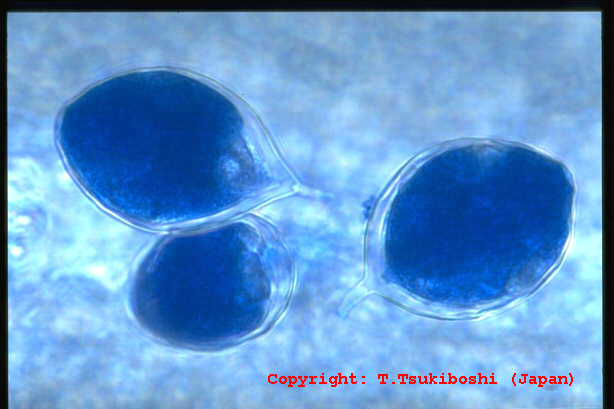
Fungal disease that causes rosette or malformation of the infected plants. The disease often occurs when the fields are flooded because of much rain during May to June. The infected leaf fades and waves, and the upper leaf become twisted because of roll and thickness when occurring at the 6-7 leaf stage. This prevents the development of the leaf and the whole plant shrinks. The sign of the disease is white powders produced on the infected leaf after rainnig. These are mass of zoosporangia of the causal organism and they germinate and release zoospore in water and spread. The host range of the causal organism is wide and it can infect more than 140 kinds of garamineous plants such as rice and wheat. |
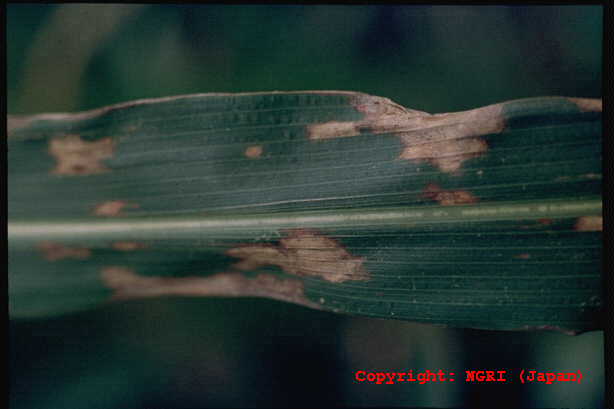 |
Minor fungal disease. The lesions are often formed on the edge of the leaf and become brown, oval to irregular. The occurrence of the disease is limited to specific varieties of sudangrass. Among causal organisms, C.lunata is reported to cause head blight in foreign countries.
|
 |
 C. sorghicola |
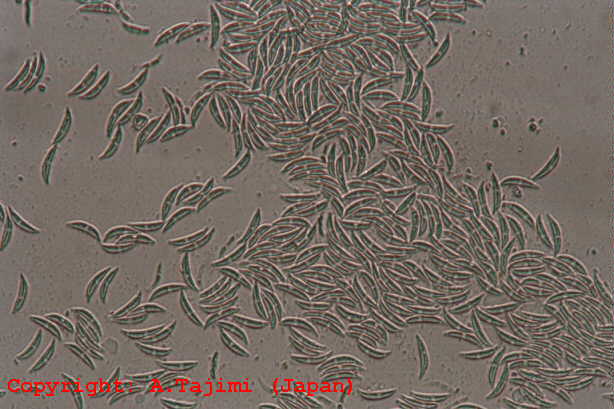
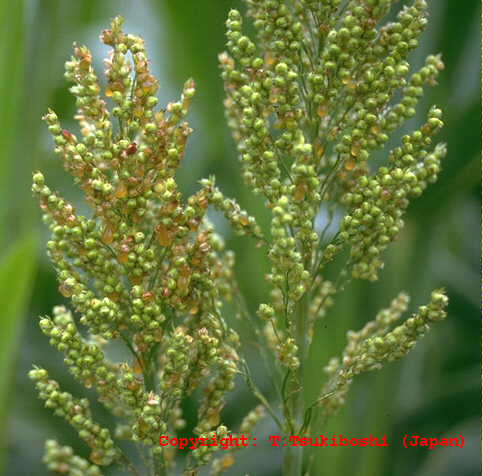
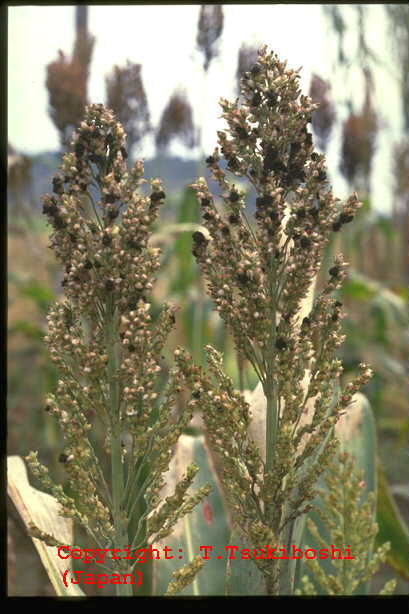
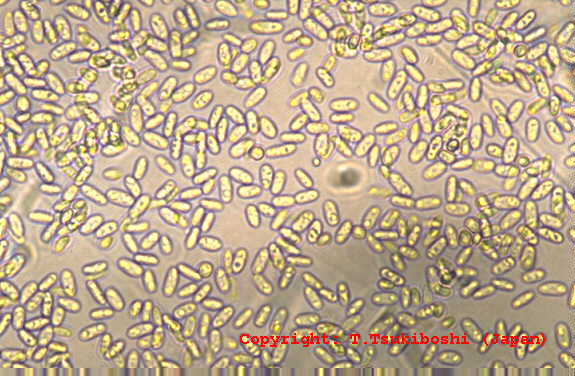
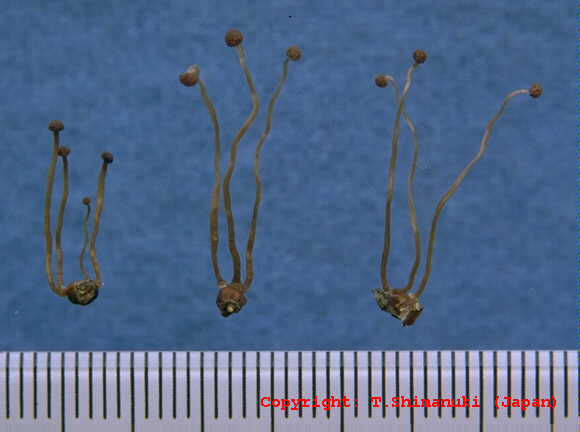
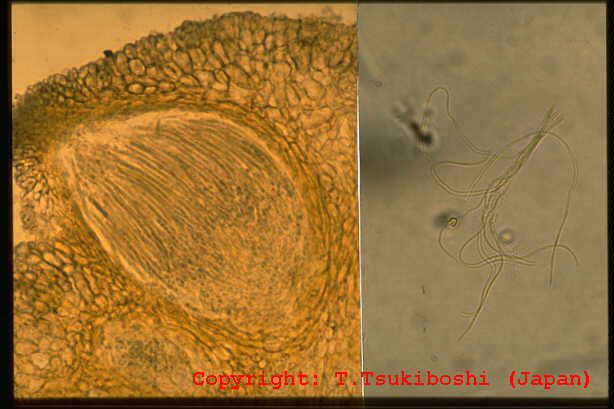
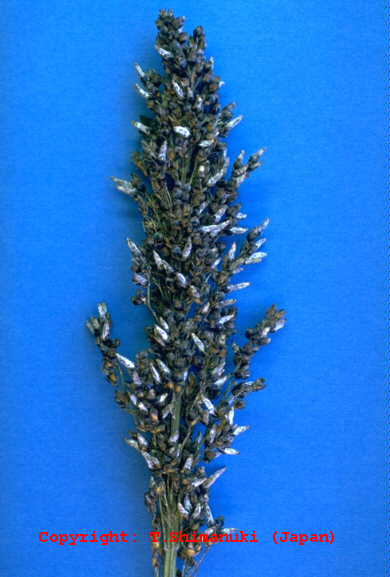
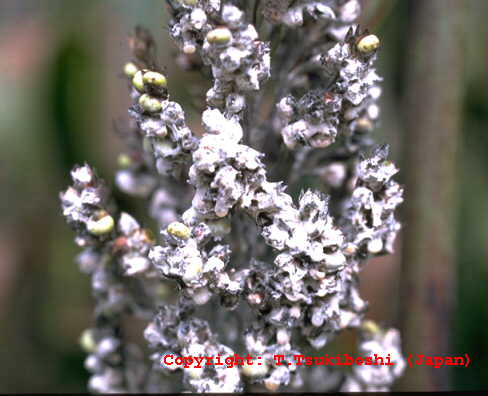
Important fungal disease whose toxicity to livestock is worried about. The disease produces honeydew hanging down from flowers at the midsummer. Many conidia are included in it and disperse by wind, rain and insects. An epidemic occurs by repeating flower infection in such a way. As for Claviceps sorghicola, its ergots are like cow's horn covered with a white mold and produced in the early autumn on the infected flower. The ergots (sclerotia) themselves are black purple, hard, 0.5-3cm in length and contain some alkaloids. When occurring severely, all flowers produce ergots in spite of seeds. As for C. africana, the ergots are white, soft, and not so distinct in the infected flowers. C. sorghicola is occurring around Kanto Districts, the central part, and C. africana are occurring around Kyushu Districts, the southern part of Japan.
|
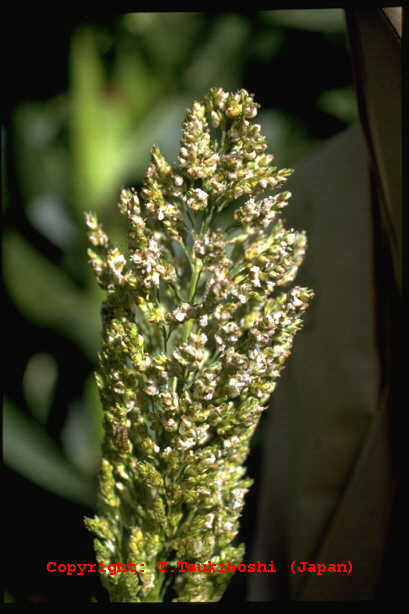 |
Ergot disease occurring in whole Africa. It is thought to be the ascus stage of the sorghum ergot disease occurring in Kyushu based on the symptom, the morphology and the alkaloid production pattern of the fungus. The honey dew is at first transparent, then turns to orange to faint pink and the surface is covered with a large amount of secondary conidia. The kinds and the amounts of the contained alkaloid toxin are large though the ergots do not enlarge so much and are not so distinct. It is occurring mainly in the male sterile strains of sorghum. |
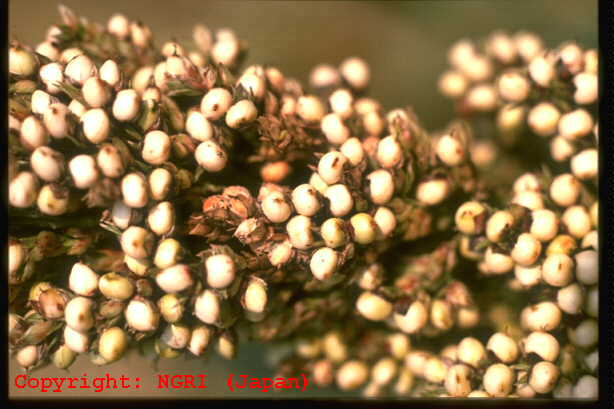 |
Unregistered disease in Japan. Fungal disease making the heads moldy and occurring especially in warm regions. The mold of faint red or the salmon flesh color is produced in the heads. When occurring severely, the infected head turns to purplish black and also the head spike is invaded. |
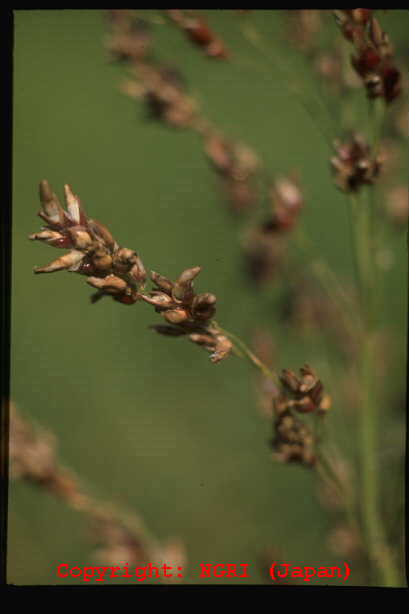 |
The smut covered with the husk of the ash white is formed to the head. The length of the smut part seems to reach as much as 1cm and expanded long the seed. The husk tears at the generation latter term and a black smut spore is exposed. The causal organism of the young plant transmits the seed, germinates with the germination of the plant the smut spore, and is growing point infected. |
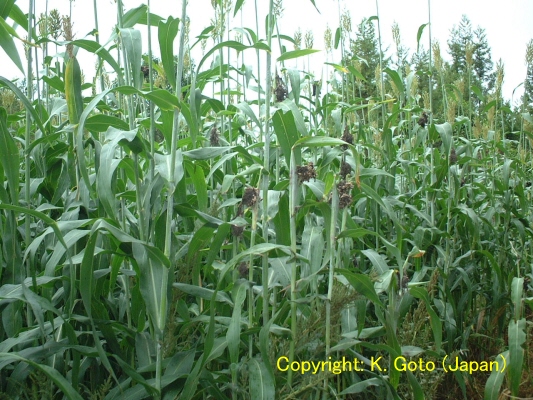 |
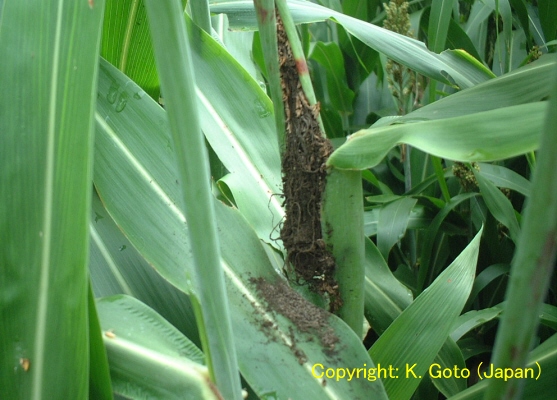
Although the smut had not been reported to occur since the first occurrence at the end of 19th century, it occurred again in 2004 in Kyushu District, the southern region of Japan. Black and large sori appears rupturing leaf sheaths from the boot to heading stage, remaining the host vascular tissues. The symptom is characteristic with the black sori and host vascular strand tissues and the sori release abundant smut spores (teliospores). The spores fall to the ground and survives for about 10 years as inocula for the next year. |
 Return to top