 |
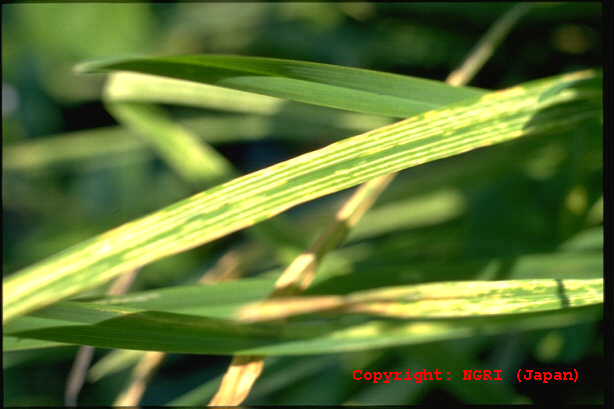
Viral disease occurring in wide regions such as Kanto, Tohoku and Hokkaido, the northern parts of Japan. The disease shows typical mosaic symptom or oblong streak and produces yellow to white mosaic on the whole surface of the leaf along the leaf vein. If the occurrence is negligible, the symptom stays only mosaic. But if occurring severely, the growth of the whole plant get worse drastically. The causal virus is transmitted by kinds of planthopper, but this not yet confirmed in Japan. Sap transmission also occurs by machine cutting, etc. If inoculating artificially, the virus can infect also oat, barley, wheat, and rye.
|
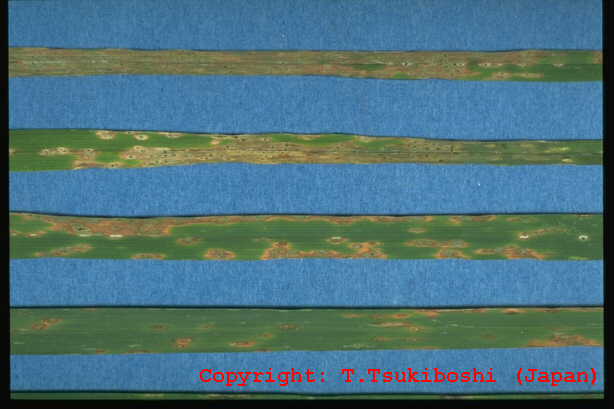 |
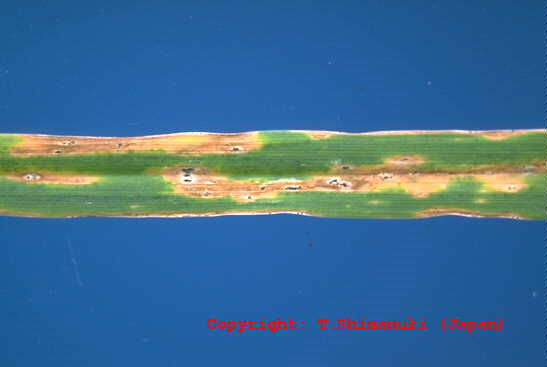
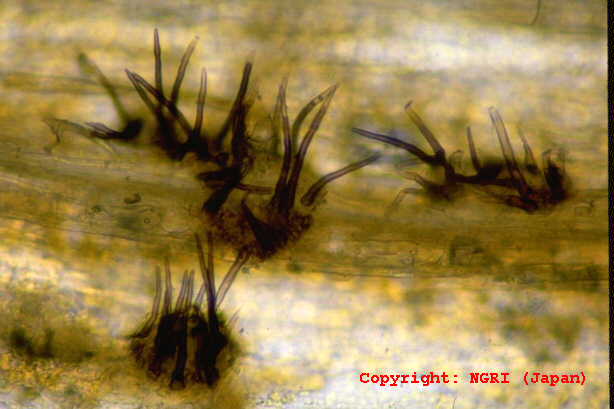
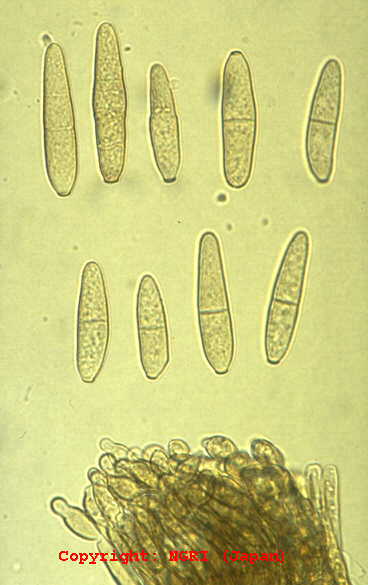
Spot-causing fungal disease which causes summer depression of grasslands in the warm regions. The lesions are at first water-soaked small spots and then expands to faint reddish brown to orange, oval to spindle shaped ones of 5-10mm in length and 2-4mm in width. The fungal tissues, setae, are produced in the center of the old lesion and looks black moldy. Orange masses of spores are formed on the lesion under wet conditions and they disperse by wind and rain. The disease often occurs from the end of the rainy season to summer. The species of the pathogen is same with those of sorghum, ryegrass and bahiagrass, but the pathogenicity is considered to be differentiated. |
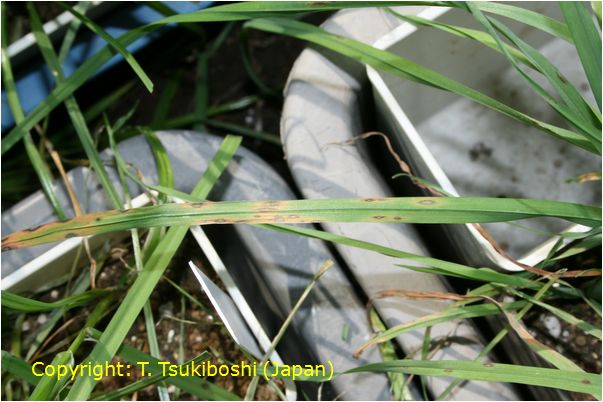 |
Spot-causing fungal disease occurring in the leaves. The disease only occurs in a greenhouse, but has not yet observed in fields. Lesions are short spindle-shaped, 2-5 mm long, grayish white sometimes with brown borders. Since the pathogen show pathogenicity also in ryegrass, rye, oat and etc., it should be the same strain causing blast in ryegrass in Japan.
|
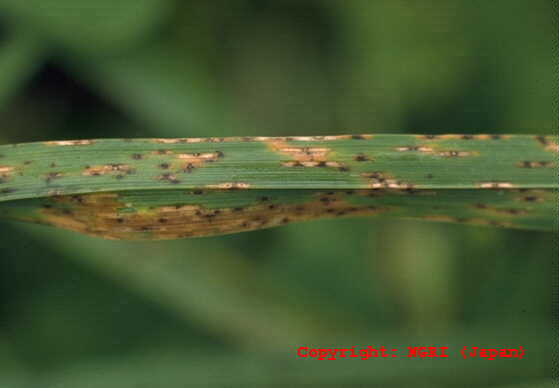 |
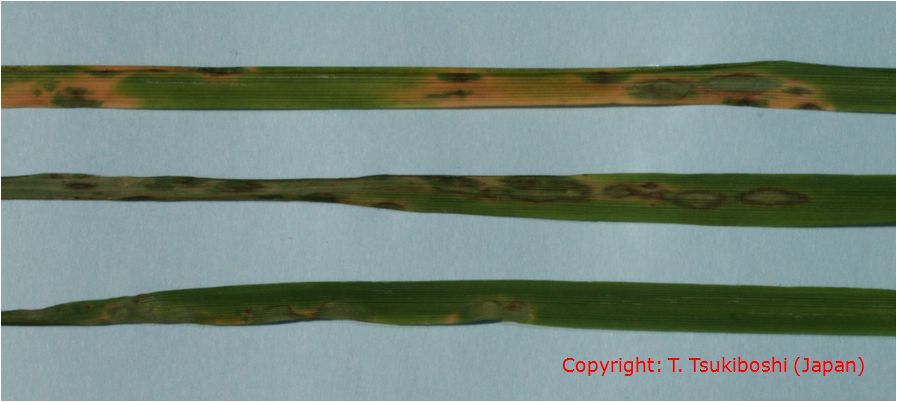
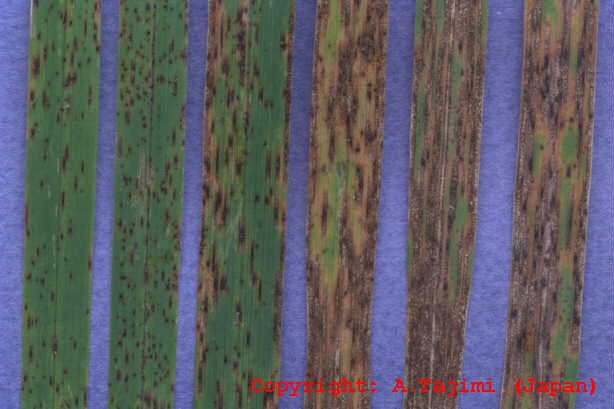
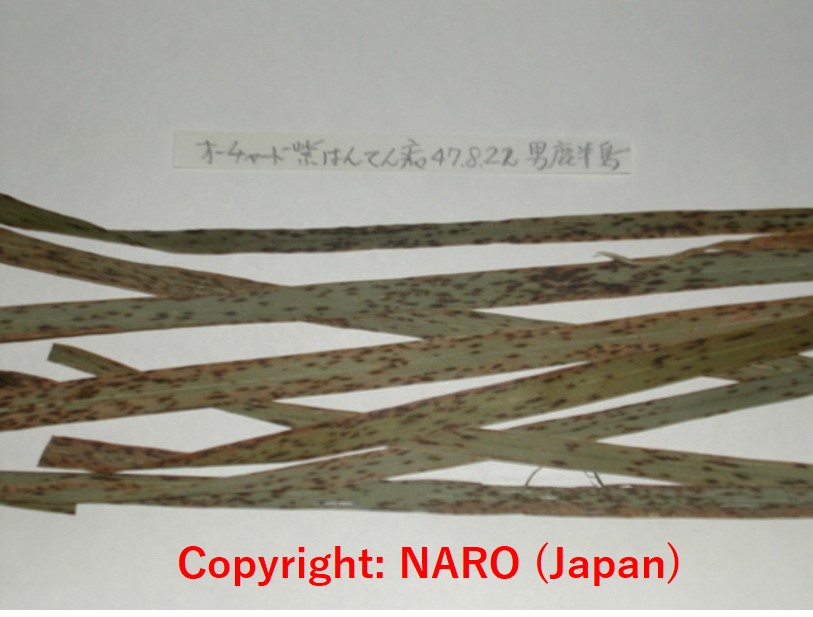
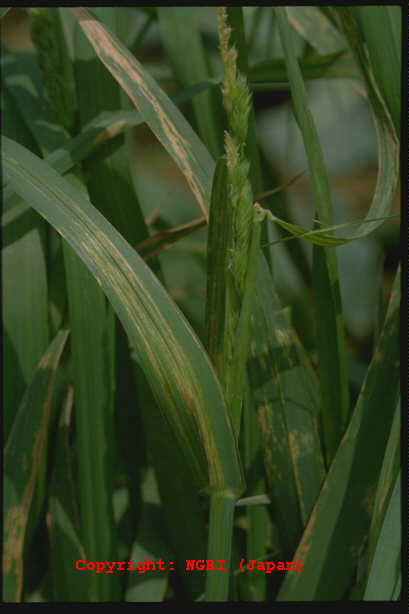
Spot-causing fungal disease occurring all over the country. The disease prohibits the seed production. The lesion of brown to purple brown, short line shaped, 2-3mm in length and 0.5-1mm in width appears between the leaf veins at first. They gradually expand to 2-3cm in length and fuse one another. At last, the whole leaf becomes ash white and killed. The spores which look like small black molds are produced on the old lesion, and they disperse and spread. The pathogen can infect timothy, tall oatgrass and etc., but the pathogenicity is considered to be differentiated. |
 |
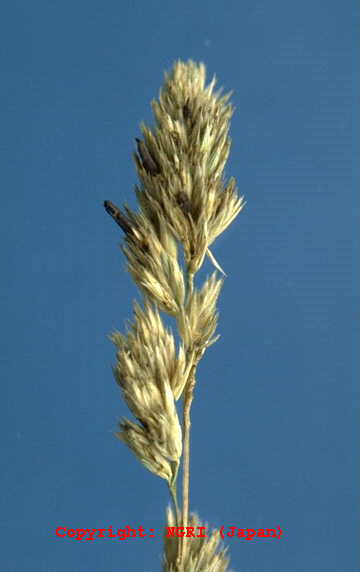 |
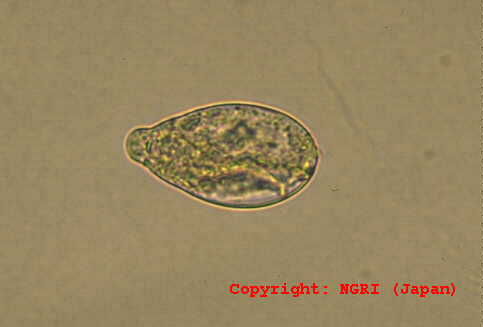
The ergots (sclerotia) are formed in the head and have toxicity to livestocks. The disease at first produces light-brown honey dew in the head just after flowering, and many spores included in the honey dew disperse and transmit by wind and rain. The black purple, cattle-horn like, ergots covered with white sphacelia of 2-18mm in length and 0.6-2.4mm in width are produced in the infected flowers replacing the seeds. The ergots drop to the ground, germinate in next year, and disperse ascospores as primary inocula. The host range is wide and the pathogen can also infect wheat, rye, timothy and fescue, etc. The alkaloids in the ergot are strongly toxic such as ergovaline and cause abortion and so on of livestocks. |
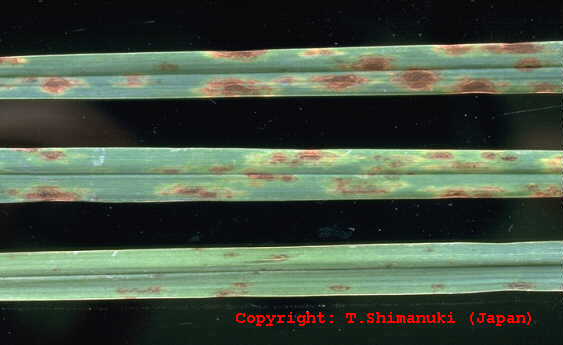 |
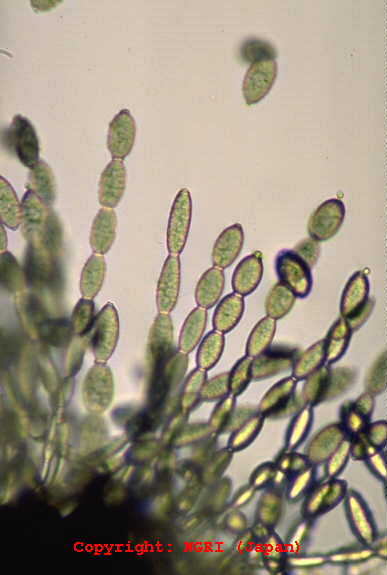
Fungal disease occurring in Hokkaido, the most northern part of Japan. The oval to spindle-shape spots of 2-3x0.5-1 mm in size are formed on the leaf. The lesions are at first purplish brown and then the center part changes to gray and is covered by white hyphae. The conidia formed on the surface of the lesions disperse and the disease spreads. |
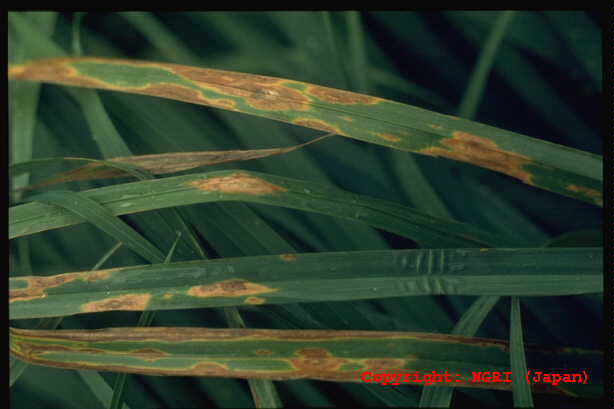 |
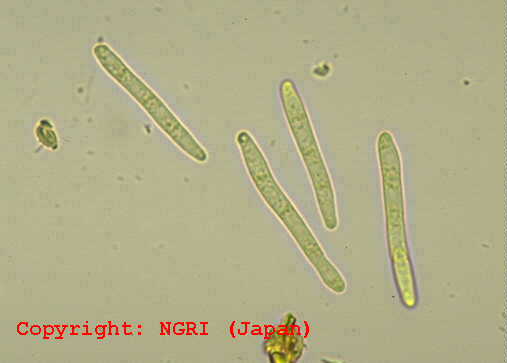
Spot-causing fungal disease occurring in the wide regions. The lesions are at first brown, small spot. They gradually extend and become drab to reddish brown and spindle-shape to oval lesions. The lesion fades to yellow or straw color from the center. The lesion extends up to 1-2cm in length and causes leaf blight at last. There appears brown small points, the pycnidia of the causal organism on the old lesion. The pathogenicity of the causal organism are not well examined. |
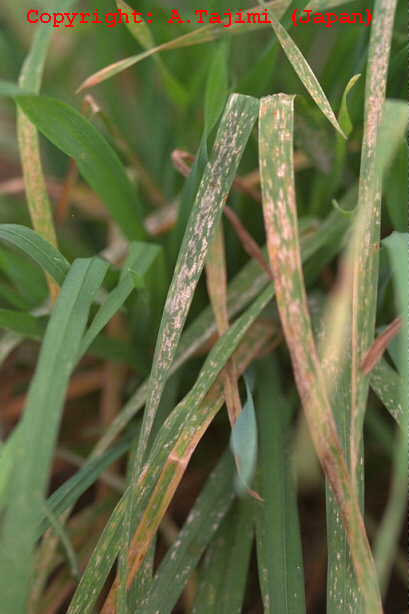 |
Important fungal disease occurring a lot in the northern region. The lesions are at first small and white to gray moldy in the leaf appearing before the rainy season. When the disease advances, the entire plant body looks like being covered with white powders. This white powders are conidia and they disperse by wind and rain. When it rains, they are washed off and yellowish brown, irregular-shaped lesions appear. The disease prefers the cool condition and occurs severely if the cloudy and insufficient sunshine weather may continue. The formae specialis of the orchardgrass of the causal organism was found for the first time in Japan. |
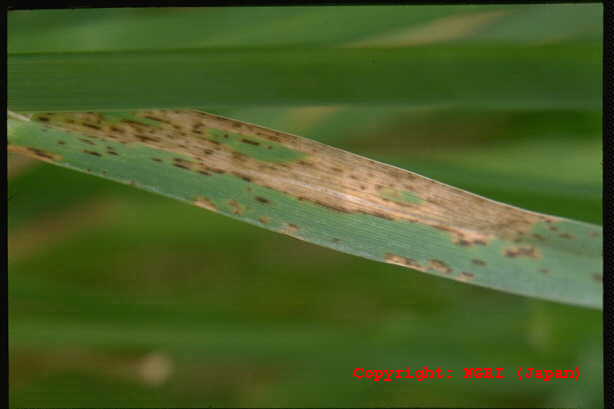 |
Fungal disease occurring from early spring to summer. The disease occurs frequently in Japan. It produces purplish brown spot at first in the leaf and they expand to the spindle-shaped lesions of 2-5x0.5-1mm in size. If the lesions fuse, they become brown. When the lesions become old, small black spots (pycnidia) are produces on them. |
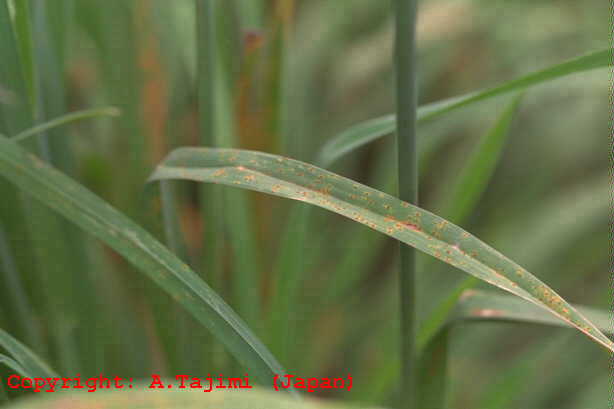 |
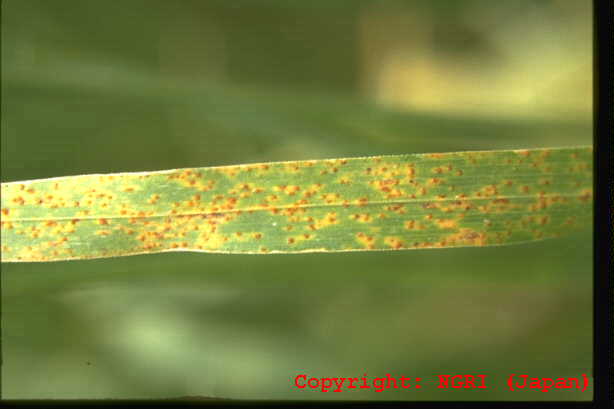
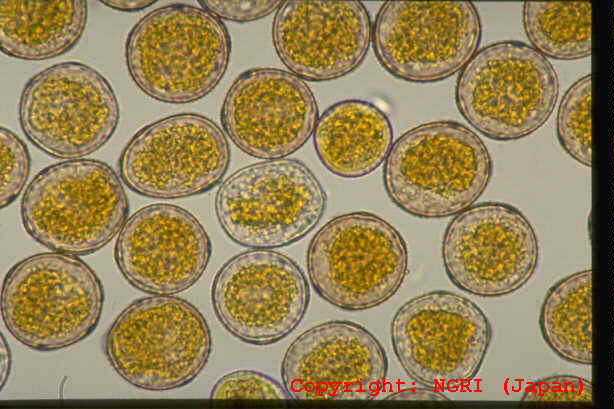
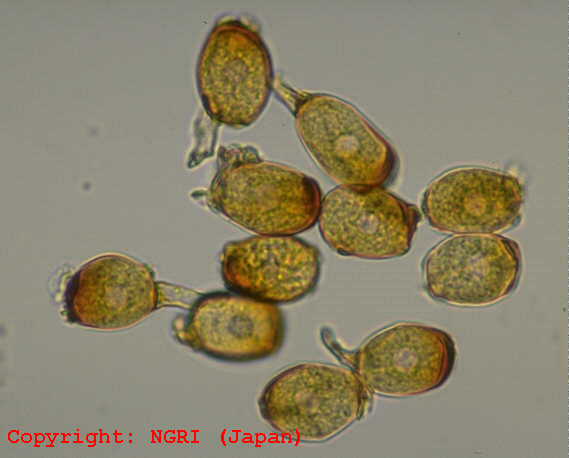
One of the rust diseases of orchardgrass and sometimes occurs from late spring to early summer. The disease produces reddish brown, oval swelling lesion on the surface of the leaf, sheath, and culm. The surface of the lesion tears when maturing and disperses urediniospores. The telia are produced mainly in the back of the leaf and become purple brown, short linear swelling. The alternate host of the causal organism is unknown in Japan, but the aecial stage was found on Rununculus in Europe. |
 Return to top