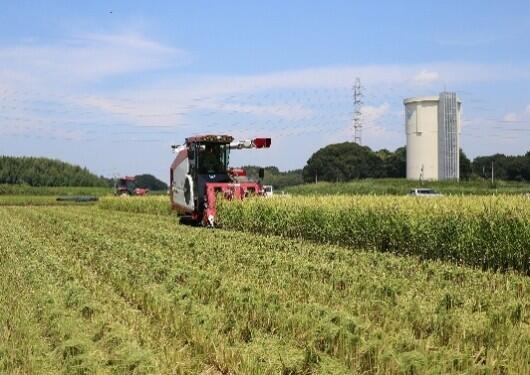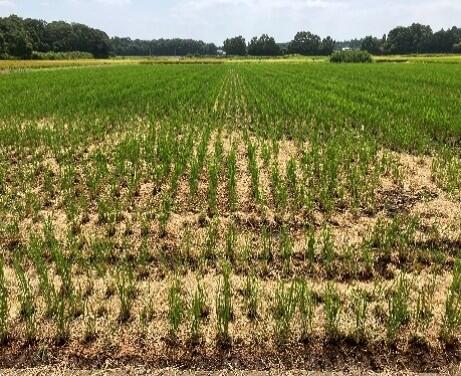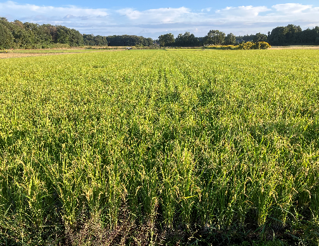
Ratooning is a cultivation technique in which a second crop, known as a ratoon crop, is harvested from the regrowth of stubble left after the first crop. With global warming, rice ratooning is expected to expand in temperate regions of Japan. In our previous study, we examined the effects of planting date (early vs. late) and cutting height (20 cm vs. 40 cm above ground level) of the first crop on the grain yield of the second crop using the high-yielding cultivar Niji-no-kirameki. We found that early planting, which ensured higher air temperatures, and a higher cutting height, which increased the nonstructural carbohydrate content of the stubble, resulted in higher grain yield of the second crop than late planting and a lower cutting height. In production areas using rice ratooning, some farmers achieved yields of 2.4 t/ha for the second crop, whereas others obtained only half that amount. To implement rice ratooning, our project team aims to develop the technique to achieve both high grain yield and good eating quality in each region.