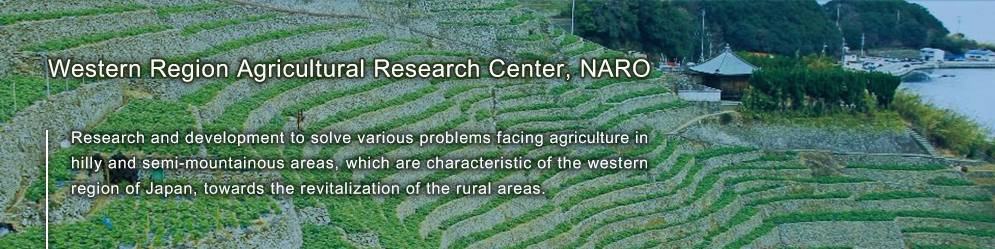
The Western Region Agricultural Research Center serves as a regional hub for innovation in agriculture
in the Kinki, Chugoku, and Shikoku regions, developing smart production systems based on advanced technologies such as AI and robotics, and strengthening collaboration with a wide range of stakeholders—including government agencies, public research institutions, extension services, and agricultural organizations—to support the sustainable development of agriculture, particularly in hilly and mountainous areas.
WARC News
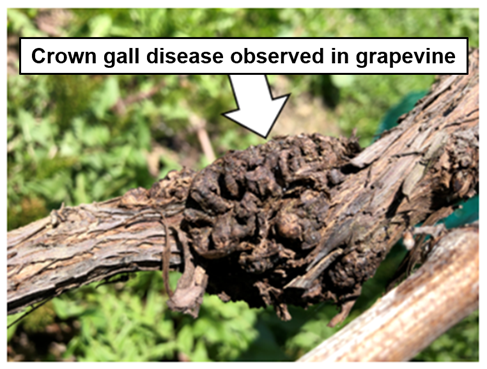
Discovery that viroid infection suppresses crown gall, a difficult-to-control crop disease
The National Agriculture and Food Research Organization (NARO) has demonstrated for the first time that infection of plants by viroids—the smallest known plant pathogens—suppresses the onset of crown gall, a disease that causes severe damage in fruit trees and ornamental crops. With future development of plant vaccines such as attenuated viroids, and as a technology expected to significantly reduce environmental impact through reduced pesticide use, it is expected to be applied to the management of crown gall in fruit trees—as well as in ornamental plants. Details are available here.
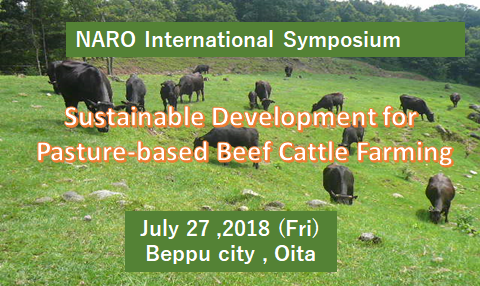
Sustainable Development for Pasture-based Beef Cattle Farming
The Western Region Agricultural Research Center(Kinki, Chugoku and Shikoku Regions), NARO (WARC/NARO) is organizing an international symposium on "Sustainable Development for Pasture-based Beef Cattle Farming" to be held at Beppu Housenso in Aoyama-cho, Beppu City, Oita Prefecture on July 27, 2018. This symposium will focus on the pasture-based beef cattle farming in New Zealand which is recognized for being competitive globally, and is aimed at (1) identifying issues that must be addressed in Japanese beef cattle production, (2) understanding the mutual strength, weakness and opportunities for beef cattle farming in Japan and New Zealand, and (3) finding common research areas for sustainable development. Details are available here.
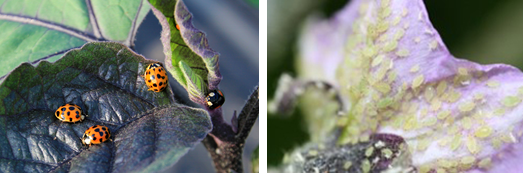
Biological Agrochemical "Flightless ladybug"
The WARC/NARO has successfully formulated a biological agrochemical "Flightless ladybug" (a harlequin ladybird beetle, Harmonia axyridis which genetically lacks the capacity to fly) which is now commercially available as a pesticide for greenhouse grown vegetable crops. A manual on how to use this pesticide has also been issued so that farmers who interested in environmentally friendly or organic farming can easily use this biological control agent. The harlequin ladybird beetle has been attracting attention as a natural pesticide because it preys on a lot of aphids which is an important pest of vegetables grown in greenhouses. However, the adult insects would usually fly away and do not stay in greenhouse facilities. Therefore, WARC/ NARO started to search for a natural strain with reduced flying ability. Extensive crossbreeding of this strain resulted in a strain which totally lacked the capacity to fly. The biological agrochemical "Flightless ladybug" can be formulated in a larval stage so that even after the larvae develop into adults, the effects in controlling aphid infestation persist. The application has been demonstrated in the Kinki and Shikoku regions in collaboration with prefectural research centers. The Agrisect Inc. has formulated "Flightless ladybug" which has been registered as a biological pesticide and available in the market.