
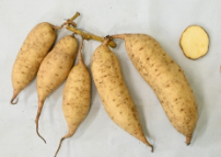
In the Kyushu and Okinawa regions, warm, high-rainfall climatic conditions are utilized to produce regional staple crops such as sweetpotato, sugarcane, and open-field vegetables.
In recent years, damage caused by sweetpotato foot rot disease, which had been a serious problem particularly in southern Kyushu, has been reduced through the development and dissemination of disease management technologies, including the use of resistant varieties. However, various challenges still remain, such as responses to newly emerging tuber rot symptoms, the aging of farmers, and rising costs of agricultural inputs. In addition, exports of sweetpotatoes, mainly to Asian markets, have been increasing in recent years. As sweetpotato has been designated as a priority export commodity, further expansion of exports is required. In sugarcane production, the occurrence of smut and rust diseases, as well as natural disasters and the aging of farmers, are major challenges.
In response, the Department of Field Crop Research is conducting research and development focused on sweetpotato and sugarcane, including the breeding of disease resistant sweetpotato varieties and high yielding, disease resistant sugarcane varieties; the development of management technologies for major sweetpotato diseases and labor saving cultivation techniques; advanced utilization technologies for organic materials; and long term quality preservation technologies for sweetpotatoes.
Through the development of these technologies, we aim to contribute to the stable production of upland crops and the expansion of exports in the Kyushu and Okinawa regions.