
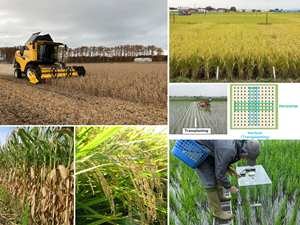
through Smart Agriculture Technologies
Paddy-based agriculture in the Tohoku region faces numerous challenges, including frequent weather-related disasters and outbreaks of pests and diseases associated with climate change, a declining agricultural workforce, the expansion of farm size and the widening of farming areas, rising agricultural input costs, and consistently low soybean yields. In recent years, large-scale farms in particular have increasingly introduced dry direct-seeded rice cultivation, and efforts to promote paddy-based crop rotation are also expanding; however, effective implementation requires region-wide land-use planning. In addition, organic paddy farming is characterized by small farm size, and labor-saving practices suitable for large-scale operations are needed. In this research area, centered on a block rotation of dry direct-seeded rice―grain corn―soybean, we will leverage smart agriculture technologies to develop a wide-area, sustainable regional farming model that achieves high labor and resource-use efficiency and strong environmental performance while ensuring profitability. We will also promote the development of labor-saving organic cultivation systems, and advance the breeding of rice and soybean varieties, along with related technologies, to enable labor-saving and stable production even under climate change.