In this research department, we are engaged in the development of insect pest and disease management technologies that simultaneously enhance agricultural productivity and reduce environmental impacts, thereby contributing to the establishment of environmentally sustainable food systems. For major greenhouse vegetable crops, we are developing control technologies against difficult-to-manage pests using natural enemies with enhanced predatory capacity, as well as advancing integrated insect pest and disease management approaches that utilize alternatives to chemical pesticides. Through these efforts, we aim to promote technology transfer to companies and facilitate adoption in production fields. In addition, we are developing climate change-responsive decision-support systems for the management of major insect pests and diseases of rice plants. By implementing these systems through Web APIs, we will promote technology transfer to companies and institutions and support their utilization in rice paddy fields. We further aim to develop control technologies for rot diseases that have become problematic in sweet potato production areas, as well as management strategies based on diagnosing disease potential level for soil-borne diseases in soybean fields, to achieve practical application in agricultural practice. For ensuring the efficient and steady advancement of these research and technology dissemination, we will work in close collaboration with a wide range of stakeholders, including public research and extension organizations and private companies, and will actively disseminate information on our research.
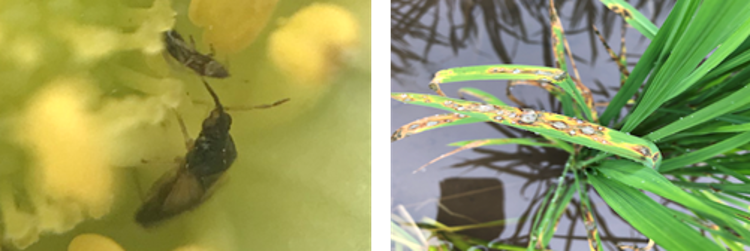
Right : Rice blast, one of the target diseases in the development of the decision support
system for management of major insect pests and diseases of rice plants.