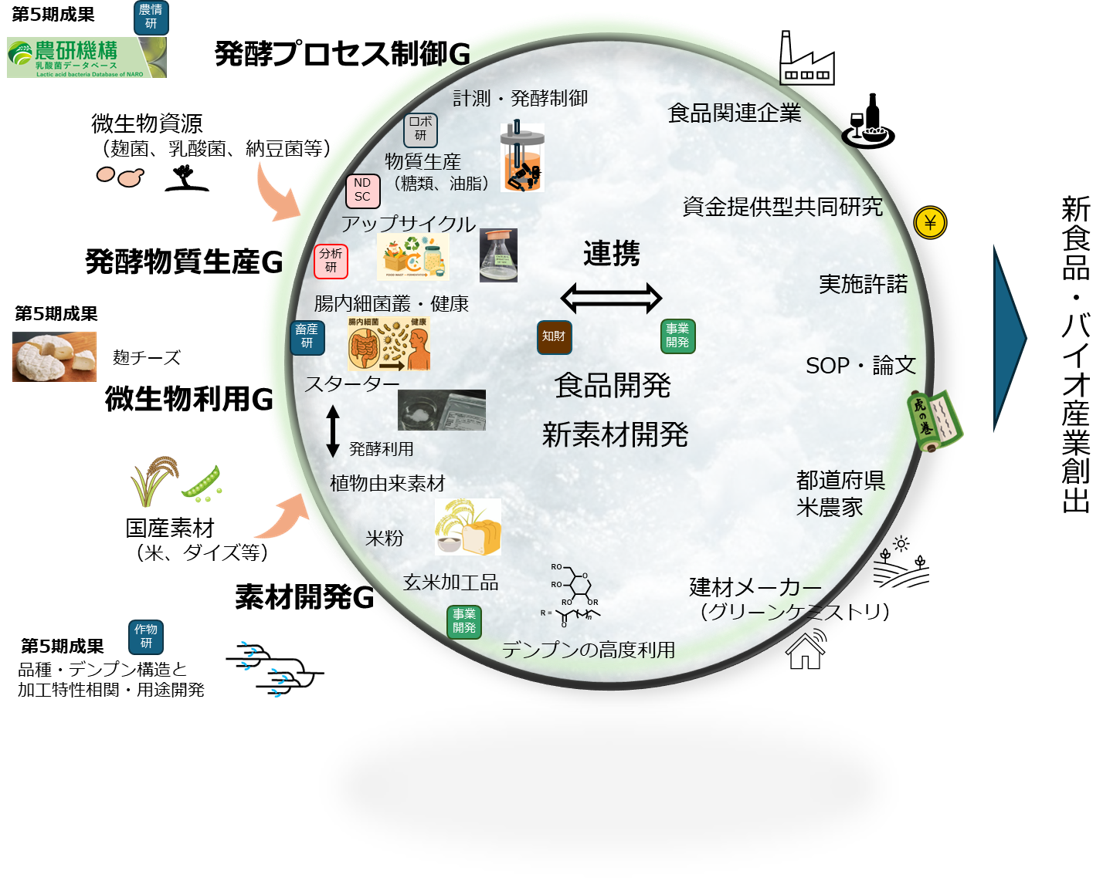
Amid increasing instability in global socioeconomic conditions, concerns have emerged regarding the potential shortage of high-quality protein resources. Consequently, there is a growing need to promote the expansion of rice consumption, as well as the reuse and valorization of food loss materials and agro-food by-products. From the standpoint of environmental sustainability, it is also essential to establish a circular economy and mitigate environmental burdens through the production of value-added materials derived from renewable resources, including agricultural products.
Furthermore, the promotion of human health through the maintenance of gut microbiota—facilitated by the consumption of traditional Japanese dietary patterns, particularly fermented foods—has become a national priority.
In response to these challenges, the Department of Food Microbiology and Biomaterials Research focuses on the development of advanced technologies for the precise control of alternative protein production via microbial fermentation, the upcycling of underutilized biomass resources, and the high-value processing of renewable materials such as starch. In parallel, this department aims to advance and disseminate novel food production technologies utilizing lactic acid bacteria and rice flour, as well as to develop functional ingredients that effectively promote the proliferation and stable colonization of beneficial gut microbiota.
Moreover, by exploiting the unique physiological and metabolic characteristics of fermentation microorganisms—including filamentous fungi used in koji production, lactic acid bacteria, and Bacillus subtilis (natto strains)—this research seeks to establish reliable and scalable systems for the stable supply of fermented foods and microbial starter cultures. Through these efforts, it aims to contribute to the sustainable development and innovation of the food industry.